Common Medications That Can Affect Your Hair

The short answer
What medications cause hair loss? Beta-blockers, retinoids and blood thinners are among the most common medication triggers, and many other medicines have been linked to it too, according to StatPearls. The good news: it's usually reversible, DermNet says. Why it happens comes down to how hair grows in cycles, StatPearls explains. Losing 50 to 100 hairs a day is normal, according to the American Academy of Dermatology (AAD); shedding well beyond that is called excessive shedding. Don't stop a prescribed medicine on your own. Stopping some medicines abruptly can cause serious health problems, the AAD warns.
What medications cause hair loss most often?
Whether a medicine affects your hair, and how much, depends on the drug and on you, according to DermNet. Some lead to hair loss in most people at a standard dose. Others are only occasionally to blame.
Beyond the most common triggers, DermNet's list includes:
Other blood pressure medicines, such as ACE inhibitors
Hormones, including birth control pills (while you take them, after you stop or when you switch) and hormone replacement therapy
Seizure medicines, such as carbamazepine, valproic acid and phenytoin
Mood stabilizers and antidepressants, such as lithium
Antithyroid drugs, cholesterol-lowering drugs, amphetamines and nonsteroidal anti-inflammatory drugs (NSAIDs)
Why does hair loss from medication take months to show?
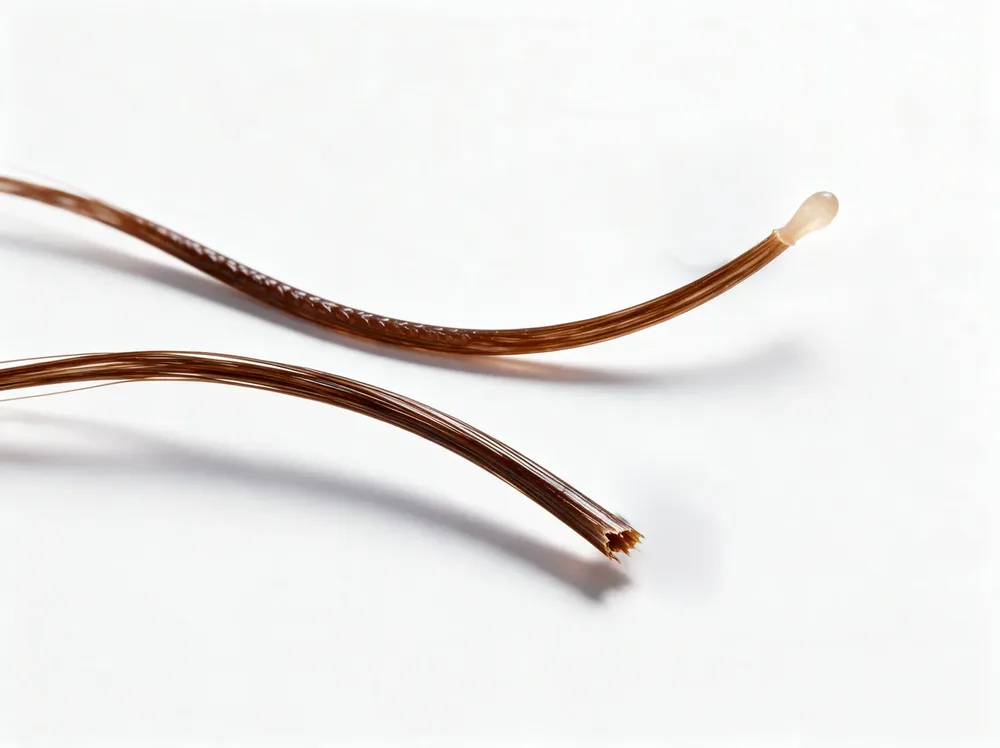
On a healthy scalp, about 85% of hairs are growing and 15% are resting, according to StatPearls. A follicle usually grows a hair for almost 4 years, then rests roughly 4 months before a new hair forms underneath and pushes the old one out.
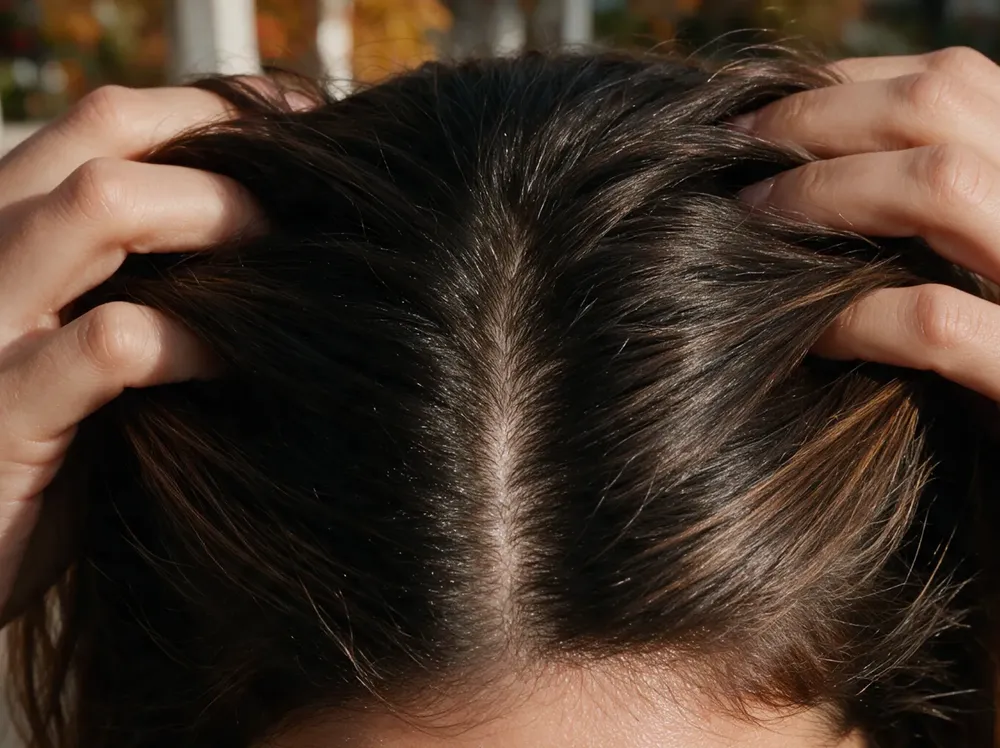
Outside of chemotherapy, nearly all medication-related hair loss follows this cycle, a pattern called telogen effluvium, DermNet explains. The medicine is thought to push a large number of growing hairs into the resting phase early, according to both DermNet and StatPearls. Those hairs stop growing for 1 to 6 months, 3 on average, StatPearls reports, then shed once the follicles start up again. The shedding usually becomes noticeable after 2 to 4 months, DermNet says. By then, people often don't connect it to the medicine, StatPearls notes. It typically thins hair all over the scalp rather than in patches, and it doesn't scar, DermNet adds.
Why does chemotherapy cause hair loss so quickly?
Chemotherapy causes a different type, called anagen effluvium, according to a second StatPearls page. It targets cells that divide quickly, including the cells at the base of a growing hair. Instead of resting and then shedding from the root, affected hairs are damaged and break. With most regimens, the hair loss begins about 2 to 3 weeks into a course of chemotherapy.
Because the follicle's stem cells are spared, this hair loss is generally reversible, though not always, StatPearls notes, and hair usually starts growing back visibly within 3 to 6 months after chemotherapy ends. About 65% of people find their new hair comes in grayer, curlier or straighter, changes that often fade with time.
Do metformin, Adderall, Wellbutrin or losartan cause hair loss?
Metformin: Hair loss isn't among the side effects on a current US metformin label.
Adderall (mixed amphetamine salts): The US label includes alopecia under skin reactions but doesn't say how often it happens.
Wellbutrin (bupropion): Alopecia shows up in reports collected after the extended-release tablet reached the market, its US label says. Those reports are voluntary, so the label can't always say how often they occur or whether the drug caused them.
Losartan: Hair loss isn't listed on the US label for losartan (Cozaar).
Will hair grow back after stopping a medication?
Regrowth is possible, the American Academy of Dermatology (AAD) says. When a medicine can be stopped, DermNet says the shedding may take as long as 6 months to settle. New growth usually appears within 3 to 6 months, though it can take 12 to 18 months for hair to look full again.
When to talk to a doctor
Talk with your doctor or a dermatologist if you're shedding more than usual after starting a new medicine or changing a dose, and ask your prescriber whether hair loss could be a side effect, as the AAD advises.
Bring a list of every new medicine, dose change and supplement from the three months before the shedding started, since that's the window doctors are advised to focus on, according to DermNet. They may also ask about a recent illness, surgery or your diet, and if the cause still isn't clear, blood tests such as iron and thyroid checks are usual.
Sources
American Academy of Dermatology. Do you have hair loss or hair shedding? AAD; No date shown. Accessed October 15, 2026.
American Academy of Dermatology. Hair loss: Who gets and causes. AAD; No date shown. Accessed October 8, 2026.
Dyall-Smith D. Alopecia from drugs. DermNet; 2009. Accessed October 8, 2026.
Hughes EC, Syed HA, Saleh D. Telogen Effluvium. StatPearls Publishing (NCBI Bookshelf); 2024; updated May 1, 2024. Accessed October 15, 2026. PMID: 28613598.
Saleh D, Nassereddin A, Saleh HM, Cook C. Anagen Effluvium. StatPearls Publishing (NCBI Bookshelf); 2024; updated April 30, 2024. Accessed October 15, 2026. PMID: 29493918.
Quallent Pharmaceuticals Health LLC. Metformin hydrochloride tablet: prescribing information. DailyMed, US National Library of Medicine; 2025; updated December 4, 2025. Accessed October 8, 2026.
Teva Pharmaceuticals USA, Inc. Adderall (dextroamphetamine saccharate, amphetamine aspartate, dextroamphetamine sulfate and amphetamine sulfate) tablet: prescribing information. DailyMed, US National Library of Medicine; 2024; updated May 29, 2024. Accessed October 8, 2026.
Bausch Health US LLC. Wellbutrin XL (bupropion hydrochloride) extended-release tablet: prescribing information. DailyMed, US National Library of Medicine; 2026; updated February 10, 2026. Accessed October 8, 2026.
Organon LLC. Cozaar (losartan potassium) tablet: prescribing information. DailyMed, US National Library of Medicine; 2026; updated January 20, 2026. Accessed October 8, 2026.
This article is for education only and is not medical advice. Talk with your healthcare provider about your own hair and scalp health.
Key takeaways
- • Outside of chemotherapy, nearly all medication-related hair loss follows the hair cycle, a pattern called telogen effluvium.
- • The shedding usually becomes noticeable after 2 to 4 months, and by then people often don't connect it to the medicine.
- • Chemotherapy causes a different type, called anagen effluvium, which with most regimens begins about 2 to 3 weeks into a course.
- • When a medicine can be stopped, DermNet says new growth usually appears within 3 to 6 months, though it can take 12 to 18 months for hair to look full again.
- • Talk with your doctor or a dermatologist if you're shedding more than usual after starting a new medicine or changing a dose.