
Article · Causes of Hair Loss
Why Am I Losing So Much Hair? What a 2008 Review Says About Female Pattern Hair Loss
The short answer
For many women, slow thinning comes from female pattern hair loss (FPHL), according to a 2008 review by Dr. Matt Leavitt. It tends to come on gradually and often shows first along the center part. The hairline and temples usually stay in place. This review names it as one of three main types of hair loss in women, along with alopecia areata and telogen effluvium, a sudden, heavy shedding. Because these can look alike, the author says the first step is finding out which kind you have.
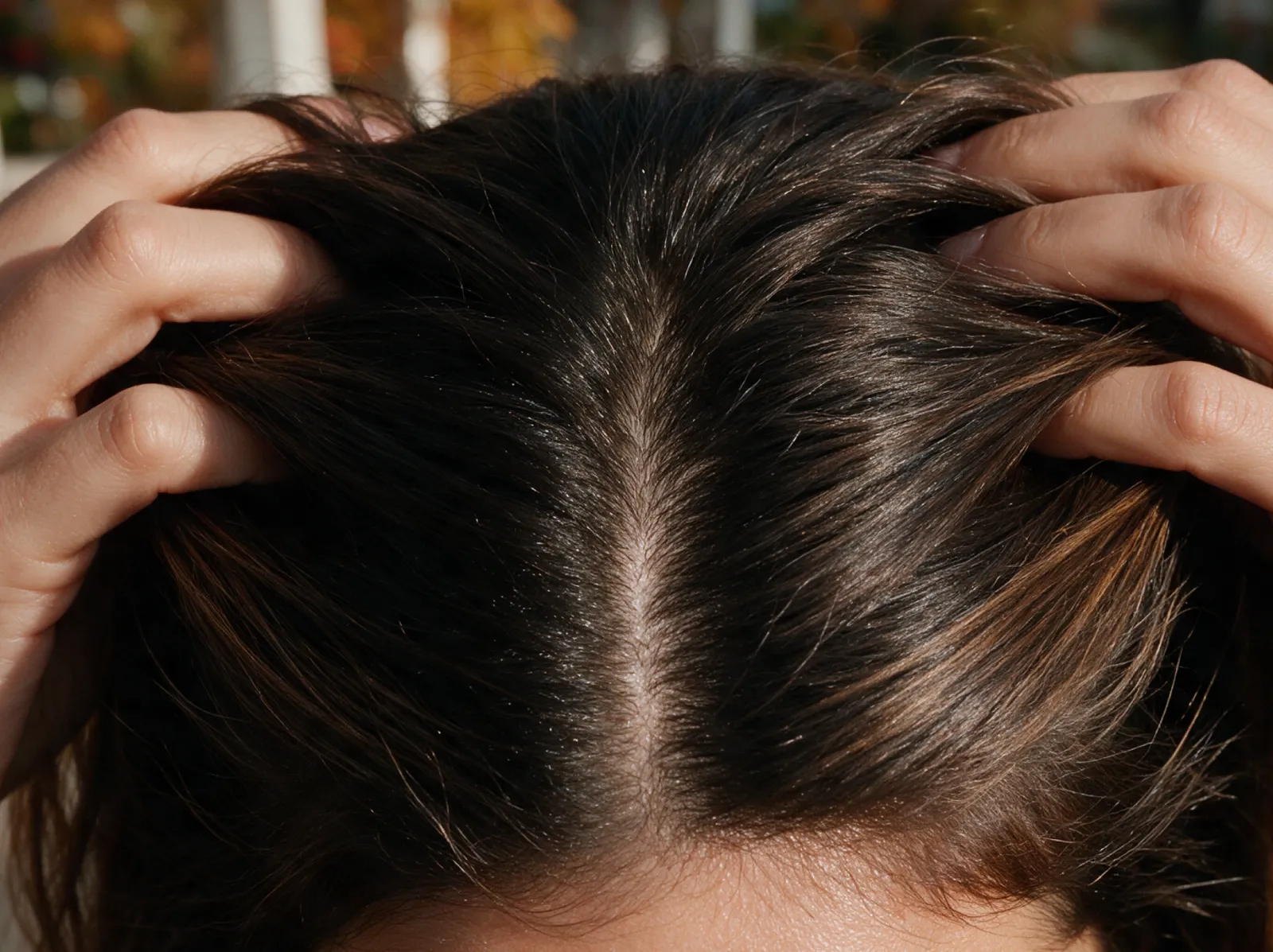
What does female pattern hair loss look like?
In 2008, the author of the review estimated that about 21 million women in the U.S. had some degree of FPHL.
According to the review, it usually shows up as thinning across the top of the head rather than bald patches. Affected hairs become finer, smaller, slower-growing and lighter in color, a change called miniaturization. Because the front hairline often stays and styling can hide the change, the author notes that women may lose more than half their hair before others notice.
The review notes that FPHL can begin as early as puberty. It estimated that signs show in about a quarter of women aged 35 to 40 and around half of women over 40. The author adds that thinning that starts earlier tends to be more severe.
Why am I losing so much hair all at once?
The review links sudden shedding more with telogen effluvium. The author writes that it can mean losing 150 to 700 hairs a day, with hairs that comb out easily, and that it tends to begin about three months after a trigger. Triggers the review lists include childbirth, high fever, illness, crash dieting, long-term low iron, emotional stress and some medicines.
The review describes alopecia areata as an immune-related condition that can cause patchy or round areas of hair loss. The author notes that hair often grows back, though the patches can return.
Which hormone causes hair loss in women?
FPHL is also called androgenetic alopecia. The name points to androgens, sometimes called male hormones, but the author of the review writes that the factors behind FPHL aren't completely understood and that more than DHT is involved.
According to the review, looking for a cause starts with a doctor's exam and, where needed, blood tests such as thyroid, iron and hormone levels. The author writes that about 90% of these tests won't give a definite answer, but that they still help narrow down the cause. He adds that normal results don't mean your hair loss isn't real. They mean the cause is harder to find.
What this means for you
The review says a thorough medical history covers family hair loss, past illnesses, medicines, hair-care habits, stress and recent surgery.
Distress is common: in a 1993 study the author cites in the review, 70% of women reported high distress about their hair loss.
In the review, the author writes that, for some women, hair transplant surgery may add density where hair is thinning, if there is enough donor hair. Temporary shedding afterward can happen; in the author's experience (the review is a narrative overview, not a clinical trial), the hair had regrown by 6 to 12 months.
Beyond the Study: if you notice a widening part or more shedding than usual, a board-certified dermatologist can help sort out the cause. It helps to jot down when you first noticed the change.
FAQs
Will telogen effluvium go away on its own? Usually. The review says most cases clear up within 5 to 18 months, and about 90% resolve without intervention. The author adds that removing or controlling the cause is the main step.
How do doctors identify female pattern hair loss? The review describes two charts made for women. The Ludwig scale has three stages of thinning on the top of the head. The Savin scale rates density from 1 to 7.
For the full findings and methods, read the full publication: Understanding and Management of Female Pattern Alopecia.
Read the full publication → Leavitt M. Understanding and Management of Female Pattern Alopecia. Facial Plast Surg. 2008;24(4):414–427.
Disclosure: The author, Dr. Matt Leavitt, is a co-founder of Xtressé. The 2008 article does not include a disclosure statement.
This article is for education only and is not medical advice. Talk with your healthcare provider about your own hair and scalp health.
Key takeaways
- In FPHL, the review says, affected hairs become finer, smaller, slower-growing and lighter in color, a change called miniaturization.
- Because styling can hide the change, the author notes that women may lose more than half their hair before others notice.
- The review says telogen effluvium tends to begin about three months after a trigger, such as childbirth, high fever, illness, crash dieting, long-term low iron, emotional stress or some medicines.
- The author writes that the factors behind FPHL aren't completely understood and that more than DHT is involved.
- The author adds that normal blood test results don't mean your hair loss isn't real; they mean the cause is harder to find.
Related from the Learning Hub
 0:17
Less Hair in the Towel: An Aesthetician's Husband Tries Xtressé
Kendra Tilleman, an aesthetician and owner of Skinfinity, got her husband to try Xtressé. She says he checks his towel for shed hair after every shower and has been losing less since he started.
 1:02
A Dermatologist's 18 Months on Xtressé, and Why She Chose It
Dermatologist and hair loss specialist Dr. Leena Ramani has taken Xtressé for about 18 months. She shares what she's noticed, including less shedding and new growth, and walks through the ingredients and the causes of hair loss she connects them to.
 3 min read
What Causes Hair Loss in Women? What a 2025 Dermatology Review Found
If your hair is thinning, you're in good company, and there may be more than one reason behind it. A 2025 review by a team of dermatologists points to five root causes: hormones, inflammation, low nutrients, aging and oxidative stress. The authors say looking at these root causes can help explain why hair thins. Hair loss is common. The review notes that more than half of postmenopausal women and up to 40% of otherwise healthy women suffer from hair loss. According to the review, female pattern hair loss is the most common type. Others include shedding (telogen effluvium), alopecia areata and scarring types. The authors note that too little of some nutrients can contribute to hair loss, and so can too much. The review also notes that high doses of biotin may interfere with some lab tests.

