
Article · Hair Loss Supplements
Can Minoxidil Cause Hair Loss? What a 2025 Review Found About “Dread Shed”
The short answer
If you’re seeing more hair fall after starting something new for thinning hair, you’re not alone, and it even has a nickname: “dread shed.” A 2025 review found this shedding was reported most consistently with minoxidil, both topical and oral. The authors call it a distressing yet expected response to starting certain therapies for pattern hair loss (androgenetic alopecia). Evidence of shedding with antiandrogens such as spironolactone, finasteride and dutasteride is limited, and shedding was rarely tied to platelet-rich plasma (PRP) with microneedling or to light-based therapies. Nutraceutical trials didn’t describe a clear shedding phase, though early shedding may have been missed because results were measured later. The authors say dread shed is widely discussed on social media but underrepresented in research, and more studies are needed.
Why does dread shed happen?
The authors say the cause isn’t well defined yet, but they describe two leading ideas:
Hair cycles syncing up. A therapy may start the growth phase (anagen) early, and resting (telogen) hairs are shed as new growth begins.
Stress-related shedding. The shedding may be a form of stress-induced telogen effluvium.
Which hair loss options are linked to shedding?
Here’s what the authors report from the studies they reviewed:
Minoxidil (topical and oral): shedding was commonly reported, and this is where most of the evidence is.
Antiandrogens: the authors note some temporary shedding could happen in theory as hormone levels change, but trials of dutasteride and finasteride didn’t describe a distinct shedding phase.
PRP with microneedling: one study reported temporary shedding in 3 of 210 patients. It started 4–6 weeks after the procedure and resolved by week 8.
Light-based therapies: trials of low-level light therapy didn’t mention more shedding. One 24-week trial of a helmet-type device reported a mild, temporary shedding phase.
Nutraceuticals: none of the trials described a distinct shedding phase. The authors note most trials didn’t measure results until at least 90 days in, so early shedding may have been missed.
What this means for you
Extra hair in your brush after starting something new can be unsettling. Here’s what the authors want you to know:
It can be distressing enough that some people stop a therapy too soon.
Researchers still don’t fully understand it, and the authors call for more studies to help clinicians guide patients.
Beyond the Study: if you notice more shedding after starting something new for your hair, talk with your dermatologist or prescriber before making changes. Shedding can have more than one cause, and hair grows slowly, so give changes time.
FAQs
Can minoxidil cause hair loss? Shedding after starting topical or oral minoxidil was commonly reported in the studies the review looked at. Current ideas point to a temporary shift of resting hairs as hair cycles sync up, or to stress-related shedding.
How long does dread shed last? The review doesn’t give a timeline for minoxidil. In one study of PRP with microneedling, temporary shedding started 4–6 weeks after the procedure and resolved by week 8.
Read the full publication → Chaudry A, DeVries A, Lam W, Lawson A, Hawkins S, Leavitt M, Nestor MS. Treatment-Induced Hair Shedding (Dread Shed) Associated with Androgenetic Alopecia Therapies. SKIN J Cutan Med. 2025;9(6):s654.
Free full text: Open-access article (CC BY 4.0)
Disclosure: The authors report no financial disclosures, and the study received no funding. This summary is for education only and is not medical advice. Talk with your healthcare provider about your own hair health.
These statements have not been evaluated by the Food and Drug Administration. This product is not intended to diagnose, treat, cure, or prevent any disease.
Key takeaways
- Dread shed is shedding some people notice after starting certain therapies for pattern hair loss.
- Reports were most consistent for topical and oral minoxidil.
- Evidence for a shedding phase with antiandrogens is limited, and shedding was rarely tied to PRP with microneedling or light-based therapies.
- The authors say dread shed is underrepresented in research, and more studies are needed.
Related from the Learning Hub
 0:52
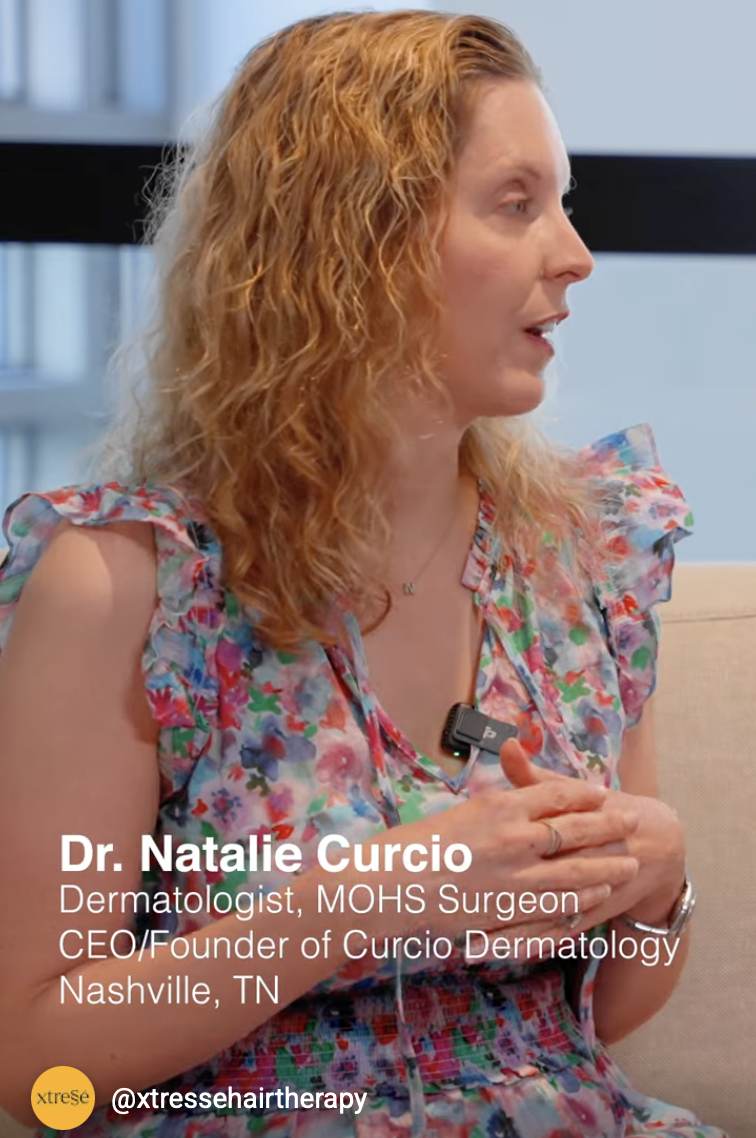
A Dermatologist's Hair Growth Three Months Into Xtressé
Dermatologist Dr. Natalie Curcio shares what she noticed about four months into taking Xtressé gummies. Her hair grew two inches in the five weeks between haircuts, and her hairdresser pointed out new growth at the crown and temples.
 0:26
Dermatologist at Five Months: Less Shedding, New Growth
Board-certified dermatologist Dr. Leena Ramani shares that five months into taking Xtressé, her hair is growing and not shedding. She says her patients, about three to four months in, notice less shedding first.
 0:13
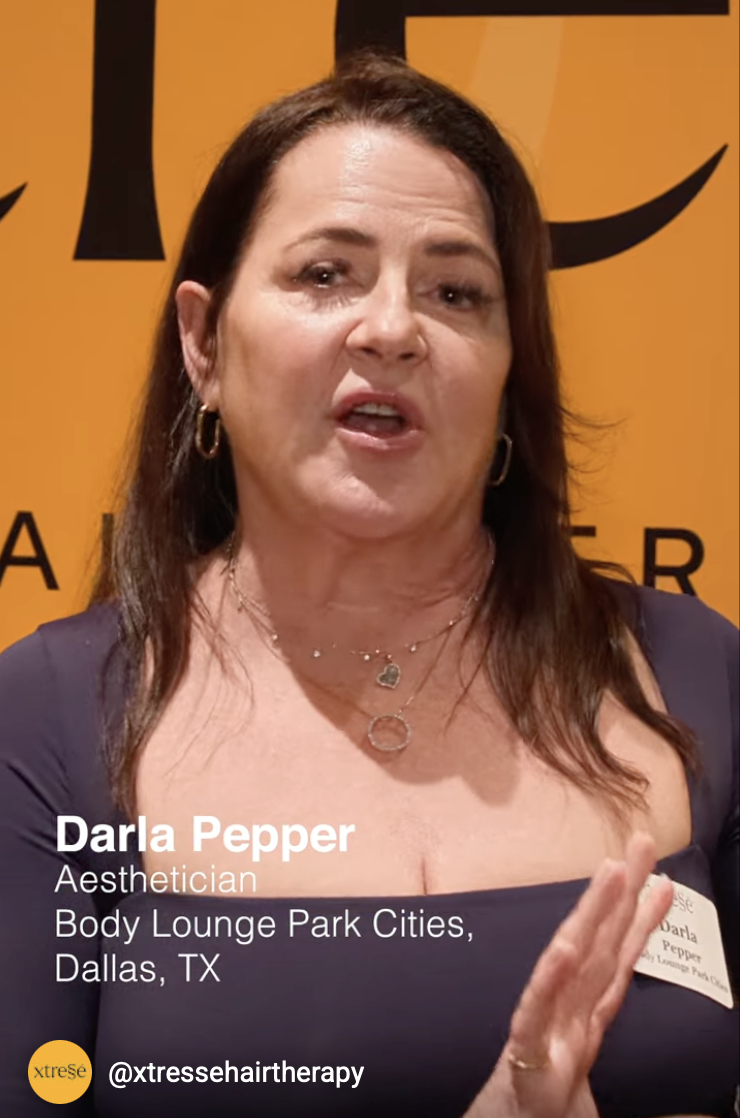
An Aesthetician's Hair Growth After Health-Related Hair Loss
Darla Pepper, an aesthetician at Body Lounge Park Cities, lost a lot of hair after health issues a couple of years ago. About two months after starting Xtressé, she says her hair is growing fast.

