
Article · Causes of Hair Loss
Is DHT the Only Cause of Pattern Hair Loss? What a 2021 Review Found
The short answer
DHT, a male-type hormone, has a well-established role in pattern hair loss in men (androgenetic alopecia), but a 2021 dermatology review says it may not act alone. The authors describe other possible contributors, including oxidative stress, slow low-grade inflammation, prostaglandins and the follicle's blood supply. Smoking and diet showed a possible link in some studies but not in others. Most studies also found men's pattern hair loss associated with at least one heart-health risk factor. With age, hair can also grow finer and shorter. Much of the evidence is still limited. The review also looked at men only.
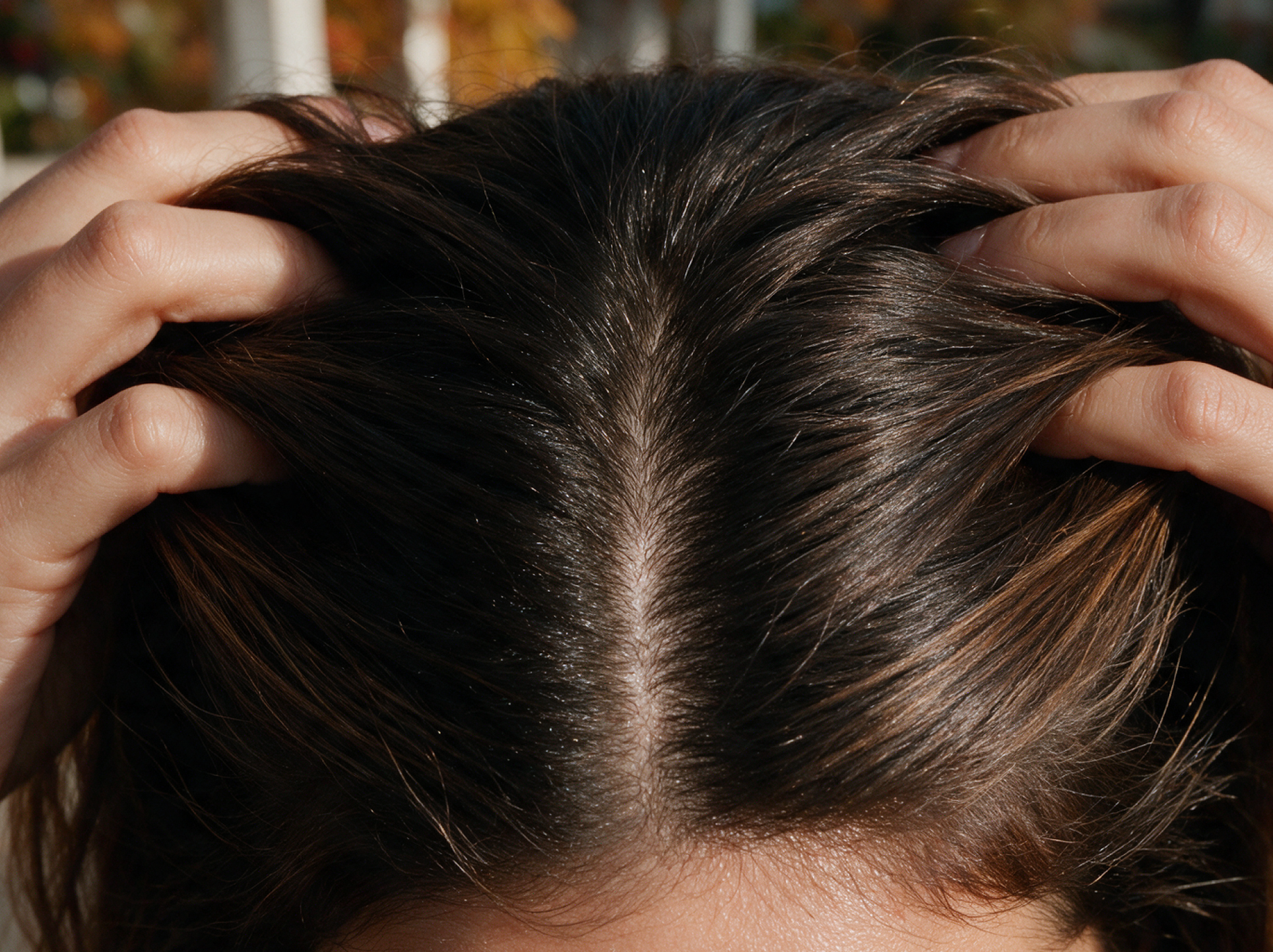
What else may be involved besides DHT?
The authors group the other possible factors into a few areas:
Oxidative stress. This is an imbalance between reactive molecules our cells make and the body's ways of keeping them in check. Cells from balding scalp studied in the lab showed more signs of it than cells from nonbalding scalp.
Low-grade inflammation. Small biopsy studies found signs of inflammation around affected follicles. The authors describe it as slow and subtle, unlike the more destructive inflammation of scarring hair loss, and say it may play a role in follicle shrinking (miniaturization).
Prostaglandins and blood supply. One study in men found higher levels of prostaglandin D2 in bald scalp than in scalp with hair. Researchers are also studying the blood vessels that feed the follicle.
Growth signals. Lab studies suggest DHT can turn down a growth-related signal called Wnt by raising a protein called DKK-1, which balding scalp carries more of.
Can lifestyle and overall health play a role?
Beyond smoking (see the FAQs), some observational studies tied alcohol, diet, long working hours or stress to pattern hair loss. Other studies found no link for alcohol, diet or work habits.
Many studies of men have looked at heart health and hair loss. They covered risk factors such as high blood pressure, insulin resistance, blood lipids and weight. Which factors showed a link varied from study to study. Some found that more severe early hair loss, especially at the crown, went with higher risk. A link like this doesn't show that one causes the other.
Age plays a part too. Not everyone gets pattern hair loss, even in very old age. It's still debated whether age-related thinning is a condition of its own, but it often overlaps with pattern hair loss in older adults.
What this means for you
This review's findings can't be assumed to apply to women. Still, it shows that thinning hair can have more than one cause. Here's what the authors suggest:
Future approaches to pattern hair loss should look beyond DHT to other influences on the follicle, such as inflammation.
Clinicians have a chance to talk with patients who smoke about quitting, given the possible link and smoking's many other health risks.
For age-related thinning, they recommend caring for any other scalp or hair conditions and managing general health issues that can affect hair.
Larger, well-designed studies are needed to sort out which factors may actually cause hair loss.
Beyond the Study: if you notice your hair thinning, a dermatologist can help you sort through possible causes.
FAQs
Does testosterone cause hair loss? This review doesn't look at testosterone levels. It centers on androgens, mainly DHT, which is made with the help of an enzyme called 5α-reductase. Medicines that block that enzyme were developed for men's pattern hair loss, and one, finasteride, was FDA-approved for it in 1998.
Does smoking cause hair loss? The evidence is mixed. Researchers think smoking could affect follicles through reduced blood flow, DNA damage and added oxidative stress, but studies of a link with men's pattern hair loss disagree.
Read the full publication → Kash N, Leavitt M, Leavitt A, Hawkins SD, Roopani RB. Clinical Patterns of Hair Loss in Men: Is Dihydrotestosterone the Only Culprit? Dermatol Clin. 2021;39(3):361–370.
Disclosure: Dr. Matt Leavitt is a co-founder of Xtressé, and Dr. Adam Leavitt and Dr. Spencer Hawkins are founding members. Dr. Adam Leavitt is an investor in Xtressé and may financially benefit from its success. The publication itself reports that the authors have nothing to disclose. This summary is for education only and is not medical advice. Talk with your healthcare provider about your own hair health.
These statements have not been evaluated by the Food and Drug Administration. This product is not intended to diagnose, treat, cure, or prevent any disease.
Key takeaways
- Small biopsy studies found slow, low-grade inflammation around affected follicles, which may play a role in follicle shrinking.
- Lab studies suggest DHT can turn down a growth-related signal called Wnt by raising a protein called DKK-1.
- Some studies found that more severe early hair loss, especially at the crown, went with higher heart-health risk, though a link doesn't show cause.
- For age-related thinning, the authors recommend caring for other scalp or hair conditions and managing general health issues that can affect hair.
- The authors call for larger, well-designed studies to sort out which factors may actually cause hair loss.
Related from the Learning Hub
 1:02
A Dermatologist's 18 Months on Xtressé, and Why She Chose It
Dermatologist and hair loss specialist Dr. Leena Ramani has taken Xtressé for about 18 months. She shares what she's noticed, including less shedding and new growth, and walks through the ingredients and the causes of hair loss she connects them to.
 3 min read
What Causes Hair Loss in Women? What a 2025 Dermatology Review Found
If your hair is thinning, you're in good company, and there may be more than one reason behind it. A 2025 review by a team of dermatologists points to five root causes: hormones, inflammation, low nutrients, aging and oxidative stress. The authors say looking at these root causes can help explain why hair thins. Hair loss is common. The review notes that more than half of postmenopausal women and up to 40% of otherwise healthy women suffer from hair loss. According to the review, female pattern hair loss is the most common type. Others include shedding (telogen effluvium), alopecia areata and scarring types. The authors note that too little of some nutrients can contribute to hair loss, and so can too much. The review also notes that high doses of biotin may interfere with some lab tests.
 4 min read
Why Am I Losing So Much Hair? What a 2008 Review Says About Female Pattern Hair Loss
For many women, slow thinning comes from female pattern hair loss (FPHL), according to a 2008 review by Dr. Matt Leavitt. It tends to come on gradually and often shows first along the center part. The hairline and temples usually stay in place. This review names it as one of three main types of hair loss in women, along with alopecia areata and telogen effluvium, a sudden, heavy shedding. Because these can look alike, the author says the first step is finding out which kind you have.

