
Article · Hair Growth & Thickness
What Is Hair Made Of? The Science of a Single Strand
The short answer
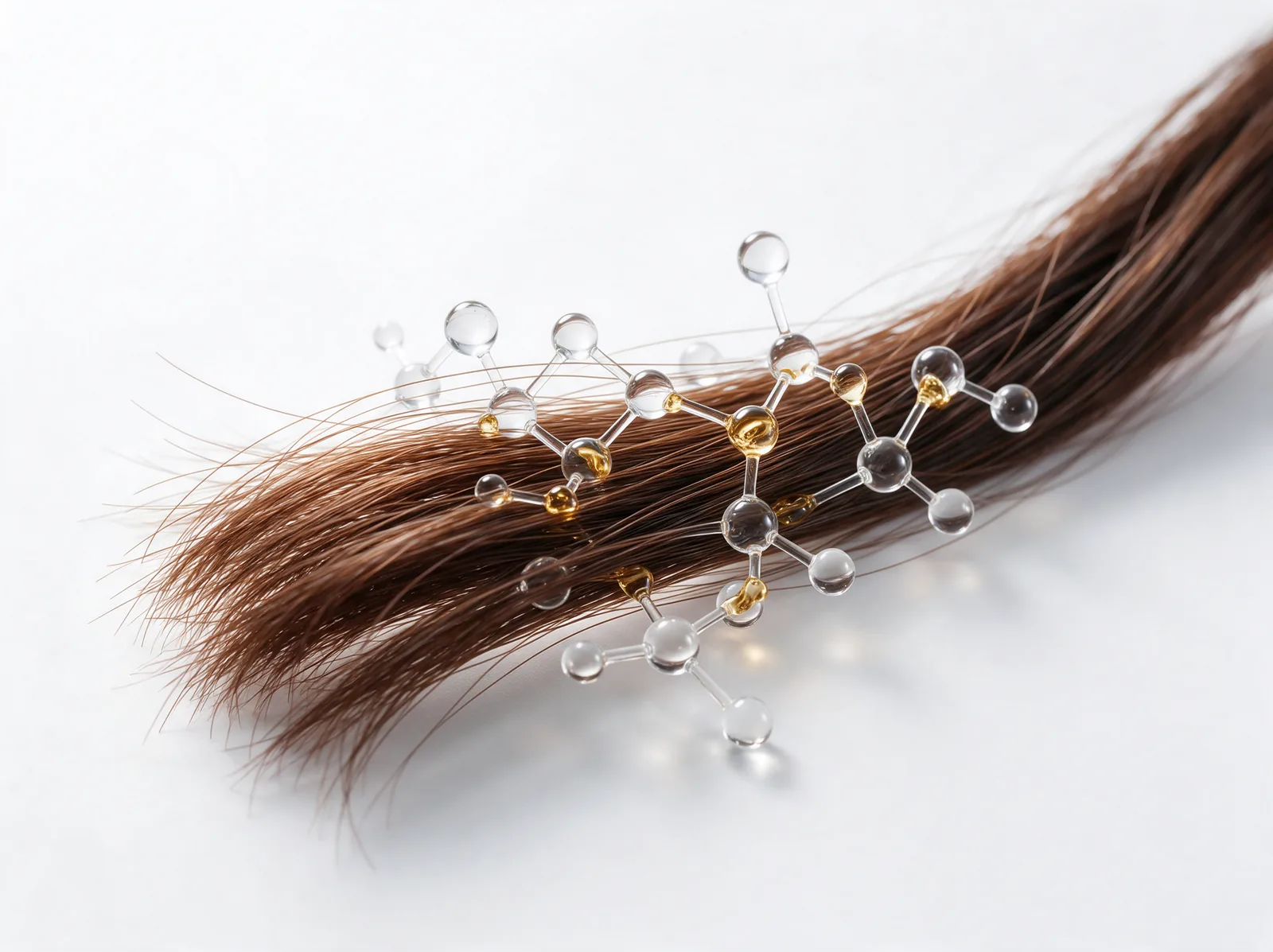
So, what is hair made of? Mostly protein, and the main one is keratin, which Cleveland Clinic calls the primary component of hair. The part you can see is built from keratin-filled cells that are no longer alive (StatPearls), arranged in two or three layers depending on how thick the hair is (StatPearls). Protein makes up roughly 65 to 95% of a hair's weight, according to a 2023 review in Polymers. An adult scalp hair is around 20 to 180 micrometers wide, per a 2014 study in PeerJ. Keratin is strong stuff: diluted acids and alkalis, solvents and water can't dissolve it, Cleveland Clinic notes.
What is hair, exactly?
Hair is a skin appendage, meaning it develops from the skin, and it grows almost everywhere on the body. It helps with temperature control, your sense of touch and protection from UV light (StatPearls).
What you see is the shaft. The living part, the follicle, sits beneath the skin, and the hair bulb at its base is where hair is actively made. There, cells divide, migrate, flatten and die, turning into the keratinized cells that make up the strand (StatPearls).
What is hair made up of?
Besides protein, hair holds lipids, water and small amounts of other compounds, such as pigments, the Polymers reviewexplains. Keratin itself is built mainly from three amino acids: tyrosine, glycine and cysteine.
The same protein helps form your nails and the outer layer of your skin. The form in hair, alpha-keratin, also shows up in the horns of mammals (Cleveland Clinic).
Why is hair so strong and stretchy?
Because keratin is rich in cysteine, a sulfur-containing amino acid, neighboring keratin chains can lock together with disulfide bonds. Hydrogen bonds also form between filaments lying side by side. These cross-links give hair fibers their shape, structure and strength, while the spiral shape of keratin chains gives hair its elasticity (Polymers).
Inside the strand, one type I and one type II keratin strand twist together into a coiled pair, and these pairs build up into filaments that gather into larger and larger fibers (PeerJ).
Water breaks keratin's hydrogen bonds, which is how a regular blow-dry can reshape a strand, according to a 2015 review in the International Journal of Trichology.
What are the layers of a hair strand?
The cuticle (outside). About 6 to 10 flat, overlapping cells point toward the tip, a bit like roof shingles. The cuticle shields the cortex, gives hair its texture and smooth look, and can survive for up to 6 years in healthy hair (Polymers). Its cells are dead (PeerJ), and each has a thin outer membrane coated in lipids, including a fatty acid called 18-MEA, which makes hair repel water (International Journal of Trichology). That fatty layer also cuts down friction between strands (Polymers).
The cortex (middle). The cortex makes up about 90% of a hair's weight, it's the layer mainly responsible for that strength and stretch, and it stores moisture (Polymers). Its long, spindle-shaped cells run the length of the strand and hold structural lipids alongside keratin (PeerJ).
The medulla (center). This innermost layer is loosely packed, includes air spaces and adds little to a hair's strength (Polymers). Only thicker hairs have one (StatPearls).
The cell membrane complex acts like glue between the cells and layers (PeerJ).
Why is some hair curly and some straight?
According to the PeerJ study, the cells in the cortex fall into different regions, and how those regions are spread out is an important factor in how much a hair curves. Straight hair tends to have them spread evenly, while curly hair tends to have them spread unevenly. In that study, the core molecular structure looked almost identical across all 12 people, whatever the hair's color or waviness.
What gives hair its color?
Cells called melanocytes in the hair bulb make melanin pigment, which extends into the shaft and is responsible for hair color (StatPearls). The cortex is where those pigments are held (Polymers). Melanocytes make two types: eumelanin mostly creates darker shades, while pheomelanin mostly creates pink and red tones (Cleveland Clinic).
When to talk to a doctor
If you notice a change in your hair's texture, or you're shedding more than usual, a doctor or dermatologist can help look into the cause.
Sources
Cleveland Clinic. Keratin: Protein, Structure, Benefits, Uses & Risks. Cleveland Clinic; 2022; updated June 9, 2022. Accessed October 15, 2026.
Hoover E, Alhajj M, Flores JL. Physiology, Hair. StatPearls Publishing; 2023; updated July 30, 2023. Accessed October 15, 2026. PMID: 29763123.
Brown TM, Krishnamurthy K. Histology, Hair and Follicle. StatPearls Publishing; 2023; updated May 1, 2023. Accessed October 15, 2026. PMID: 30422524.
Fernandes C, Medronho B, Alves L, Rasteiro MG. On Hair Care Physicochemistry: From Structure and Degradation to Novel Biobased Conditioning Agents. Polymers (Basel); 2023. 15(3):608. Accessed October 15, 2026. DOI: 10.3390/polym15030608. PMID: 36771909.
Yang FC, Zhang Y, Rheinstädter MC. The structure of people's hair. PeerJ; 2014. 2:e619. Accessed October 15, 2026. DOI: 10.7717/peerj.619. PMID: 25332846.
Gavazzoni Dias MFR. Hair Cosmetics: An Overview. International Journal of Trichology; 2015. 7(1):2–15. Accessed October 15, 2026. DOI: 10.4103/0974-7753.153450. PMID: 25878443.
This article is for education only and is not medical advice. Talk with your healthcare provider about your own hair and scalp health.
Key takeaways
- Hair is a skin appendage that helps with temperature control, your sense of touch and protection from UV light.
- Disulfide bonds and hydrogen bonds between keratin chains give hair fibers their shape, structure and strength.
- The cortex makes up about 90% of a hair's weight and is the layer mainly responsible for its strength and stretch.
- How the cell regions in the cortex are spread out is an important factor in how much a hair curves.
- Melanin pigment, made by melanocytes in the hair bulb, is responsible for hair color.
Related from the Learning Hub
 5 min read
Two Hairs, One Spot: Why Your Hair Grows in Little Bunches?
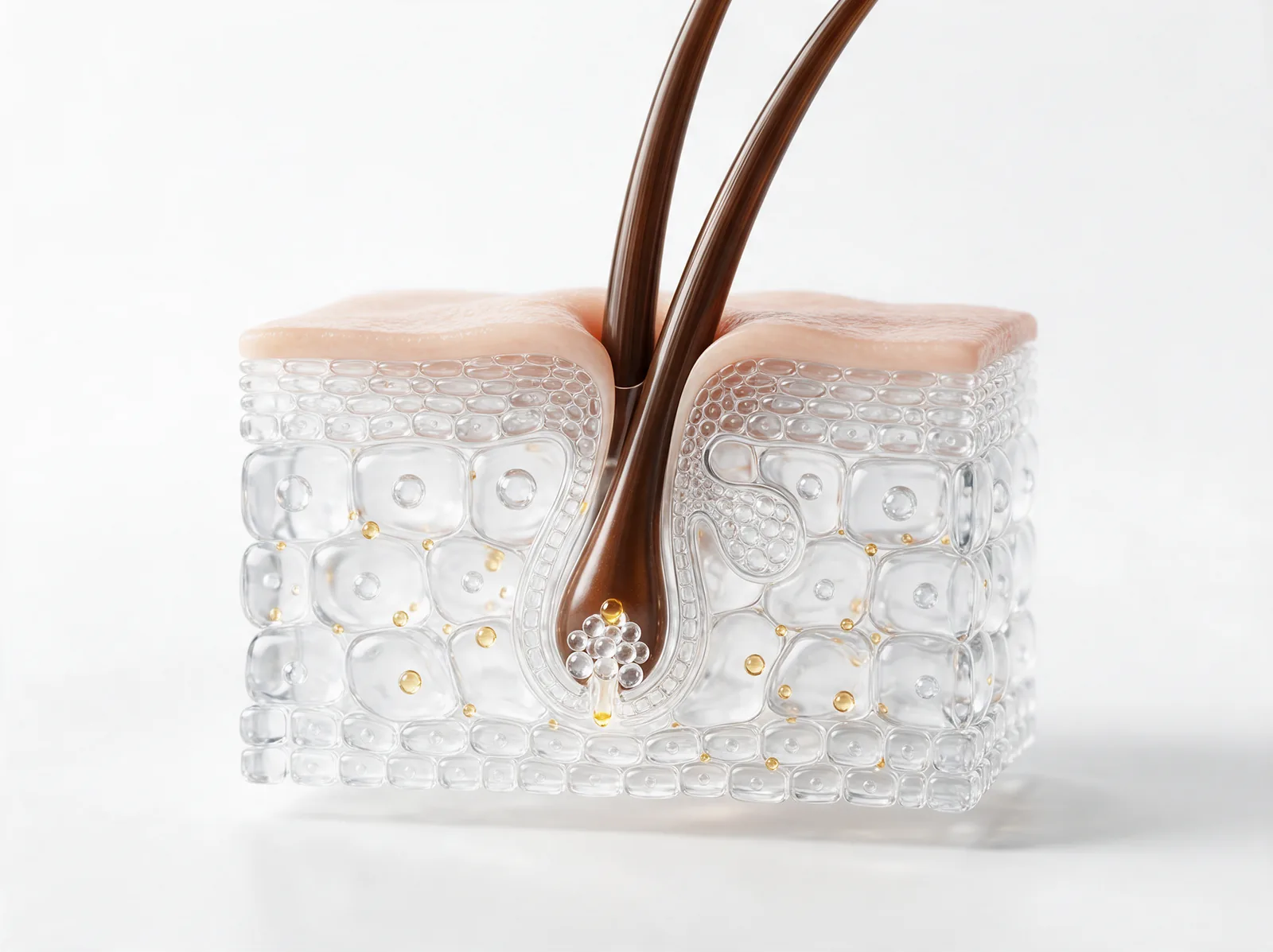
Seeing two or even multiple hairs in one follicle opening usually isn't a glitch. Scalp hair grows in tiny natural bunches called follicular units, and each one holds 1 to 4 terminal (thicker) hairs, according to StatPearls. On a healthy scalp, 2 to 3 hairs typically come out of each unit, a 2011 trichoscopy review reports, so a pair of hairs sharing one spot is simply how a scalp is built. An average scalp has somewhere between 100,000 and 150,000 follicles, according to StatPearls. New hair follicles don't form after birth, StatPearls notes, so the layout you have now was set early.
 4 min read
What Is the White Bulb at the End of a Shed Hair?
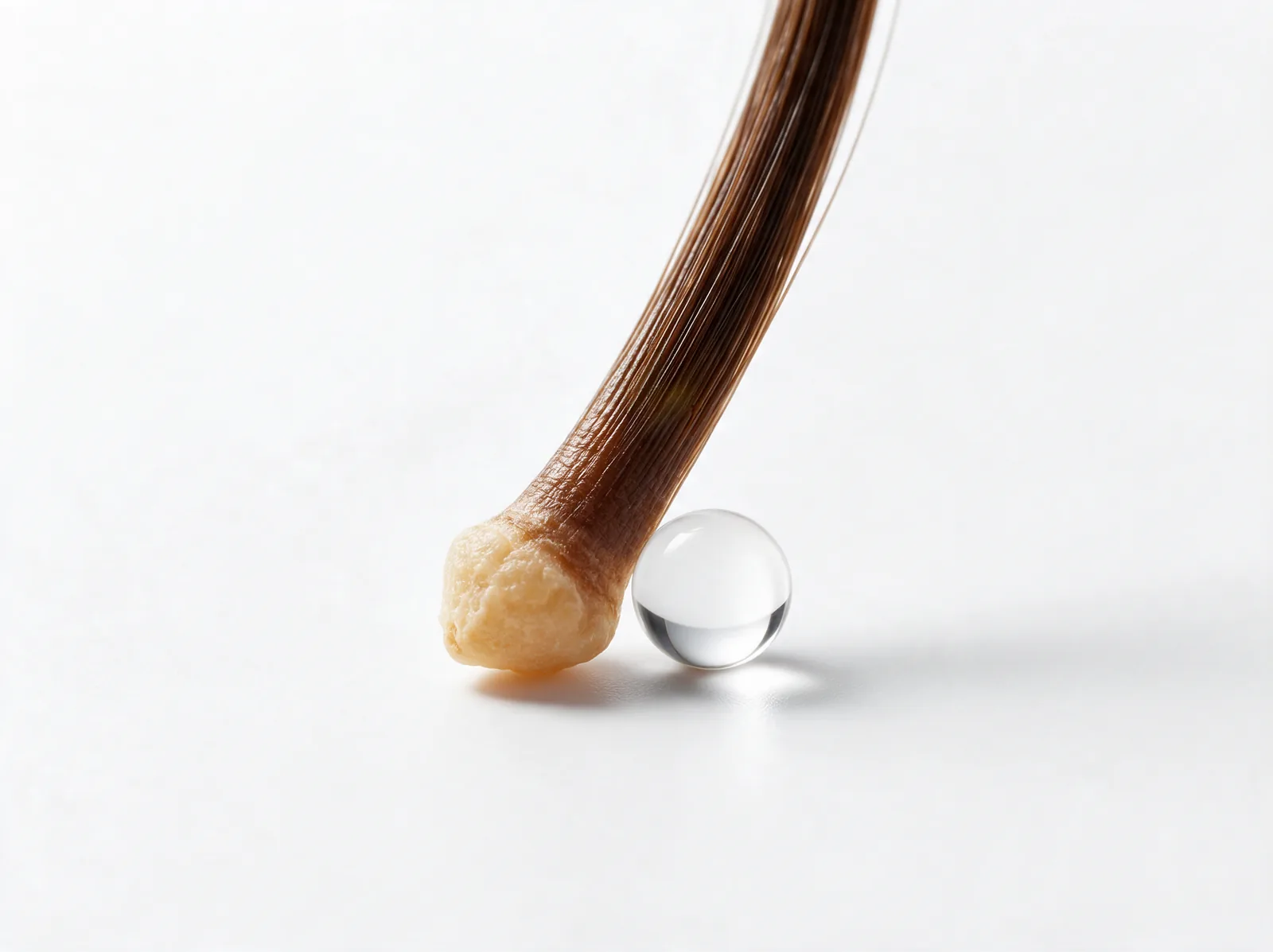
That white bulb is the root end of a club hair, a hair that had stopped growing and was resting in its follicle before it fell out. It's white because the hair bulb stops adding pigment before that root end finishes forming, according to a review of hair follicle pigmentation. Losing 50 to 100 hairs a day is normal, according to the American Academy of Dermatology. Shedding significantly more than that every day has a medical name: telogen effluvium.

