
Article · Hair Growth & Thickness
What Is the White Bulb at the End of a Shed Hair?
The short answer
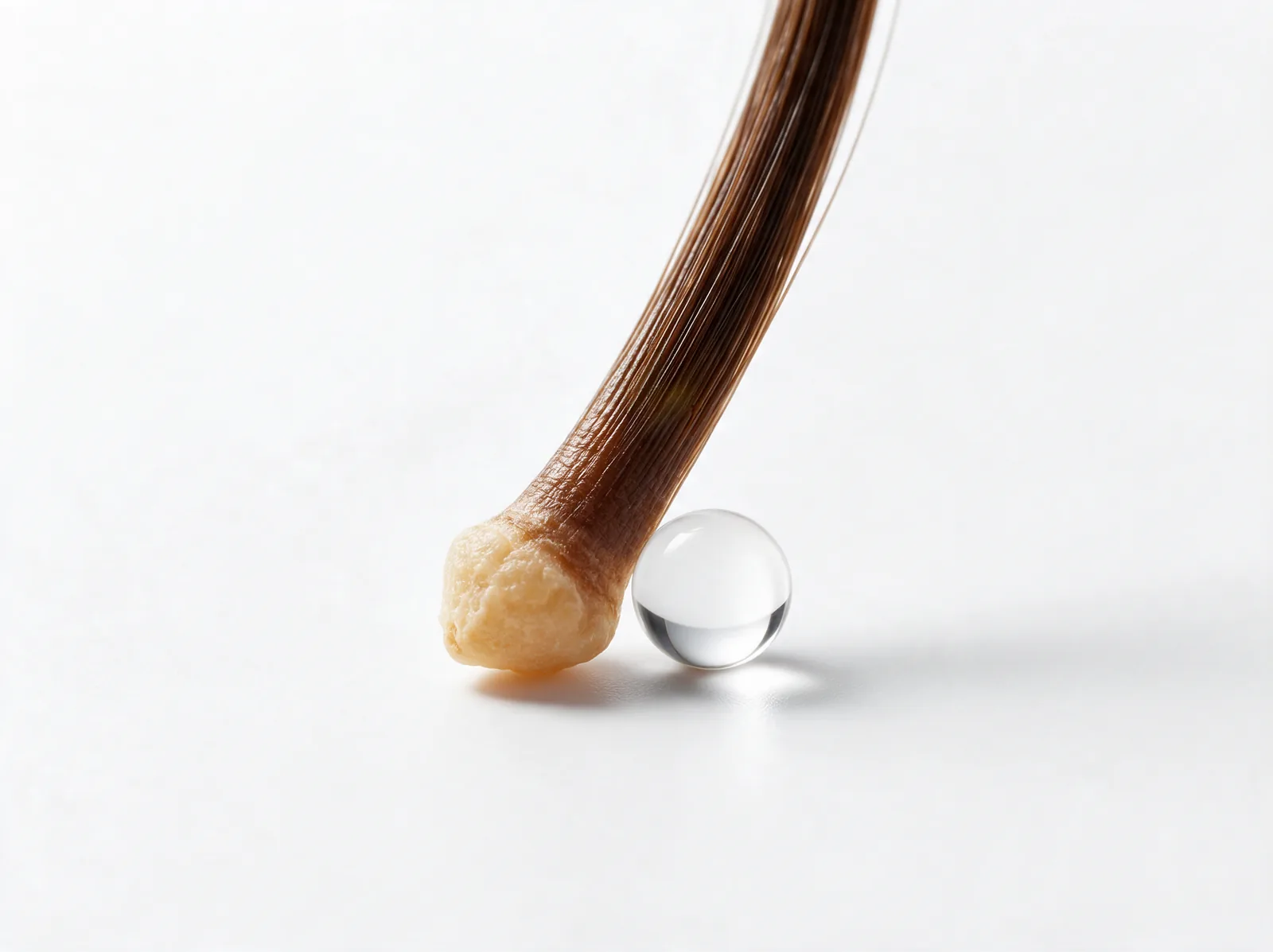
That white bulb is the root end of a club hair, a hair that had stopped growing and was resting in its follicle before it fell out. It's white because the hair bulb stops adding pigment before that root end finishes forming, according to a review of hair follicle pigmentation. Losing 50 to 100 hairs a day is normal, according to the American Academy of Dermatology. Shedding significantly more than that every day has a medical name: telogen effluvium.
What is the hair bulb?
Each hair has two parts: the shaft you can see above the skin and the follicle beneath it, as StatPearls' overview of hair physiology explains. At its base, the follicle widens into the hair bulb, the living part that actively makes hair. The bulb wraps around the dermal papilla, a structure with a loop of capillary that brings in nutrients. Cells in the lower bulb divide, move upward and become part of the shaft.
The bulb is also the only place where the hair shaft gets its pigment, according to the pigmentation review. Pigment cells there hand melanin to the cells that build the hair.
Why do shed hairs have a white bulb?
Hair grows in a repeating cycle with three phases: growth (anagen), transition (catagen) and rest (telogen), per StatPearls. Pigment-making in the bulb is tied to the growth phase. It shuts off in the transition phase and stays off through the resting phase, the review explains.
The timing is what leaves the bulb white. Pigment production starts winding down near the end of growth, but the hair-building cells keep dividing a little longer, so the base of the club hair forms with no pigment.
The transition phase reshapes the follicle, too. Up to 70% of the follicle is broken down and reabsorbed, according to the same review. The hair detaches from its blood supply, Cleveland Clinic notes, and the club hair takes shape. By the resting phase, it's fully keratinized and fully formed, per StatPearls.
Why does a resting hair fall out?
At first, a resting club hair stays firmly attached to its follicle, according to DermNet. When the follicle starts a new growth phase, a new hair grows beneath the resting one and pushes it out, as StatPearls on telogen effluvium describes.
Is the hair root bulb the same as the follicle?
No, the round bulb on a shed strand is the hair's own root, and Cleveland Clinic points out that a follicle can't be pulled out, because it's the structure in your skin that holds the hair. Removing a root doesn't mean the hair won't grow back, Cleveland Clinic notes. The follicle is among a few structures in the body that can shut down and start working again, and that process helps with hair growth.
What if the end of a hair looks different?
Doctors sometimes check hair ends with a gentle pull test, grasping a lock of hair to see whether any come out with a firm pull, as DermNet describes. Normally zero to two resting hairs come out, each identified under magnification by a rounded bulb. A long, tapering end points to a hair that was still growing, and growing hairs coming out in this test aren't a normal finding. StatPearls adds that a white bulb with no gel-like sheath around it is one way to identify a resting hair.
Try not to read too much into a single strand, though.
When to talk to a doctor
If the amount of hair you're shedding concerns you, a dermatologist can help sort out whether it's hair loss, excessive shedding or a mix of the two, according to the AAD.
Cleveland Clinic suggests talking to a healthcare provider if hair stops growing in an area where it used to grow.
Sources
American Academy of Dermatology Association. Do you have hair loss or hair shedding? AAD; No date shown. Accessed October 8, 2026.
Cleveland Clinic. Hair Follicle: Function, Structure & Associated Conditions. Cleveland Clinic; 2022; updated July 8, 2022. Accessed October 8, 2026.
Chang FLC; Oakley A, ed. Telogen effluvium (hair shedding). DermNet; created 1997; updated November 2019. Accessed October 15, 2026.
DermNet. Principles of dermatological practice: Examination of hair and scalp. DermNet; 2008. Accessed October 8, 2026.
Hoover E, Alhajj M, Flores JL. Physiology, Hair. StatPearls Publishing; 2023; updated July 30, 2023. Accessed October 8, 2026. PMID: 29763123.
Hughes EC, Syed HA, Saleh D. Telogen Effluvium. StatPearls Publishing; 2024; updated May 1, 2024. Accessed October 8, 2026. PMID: 28613598.
Slominski A, Wortsman J, Plonka PM, Schallreuter KU, Paus R, Tobin DJ. Hair Follicle Pigmentation. J Invest Dermatol. 2005;124(1):13–21. Accessed October 15, 2026. doi:10.1111/j.0022-202X.2004.23528.x. PMID: 15654948.
This article is for education only and is not medical advice. Talk with your healthcare provider about your own hair and scalp health.
Key takeaways
- At its base, the follicle widens into the hair bulb, the living part that actively makes hair.
- Hair grows in a repeating cycle with three phases: growth (anagen), transition (catagen) and rest (telogen).
- When the follicle starts a new growth phase, a new hair grows beneath the resting one and pushes it out.
- The round bulb on a shed strand is the hair's own root, and the follicle can't be pulled out because it's the structure in your skin that holds the hair.
Related from the Learning Hub
 5 min read
What Is Hair Made Of? The Science of a Single Strand
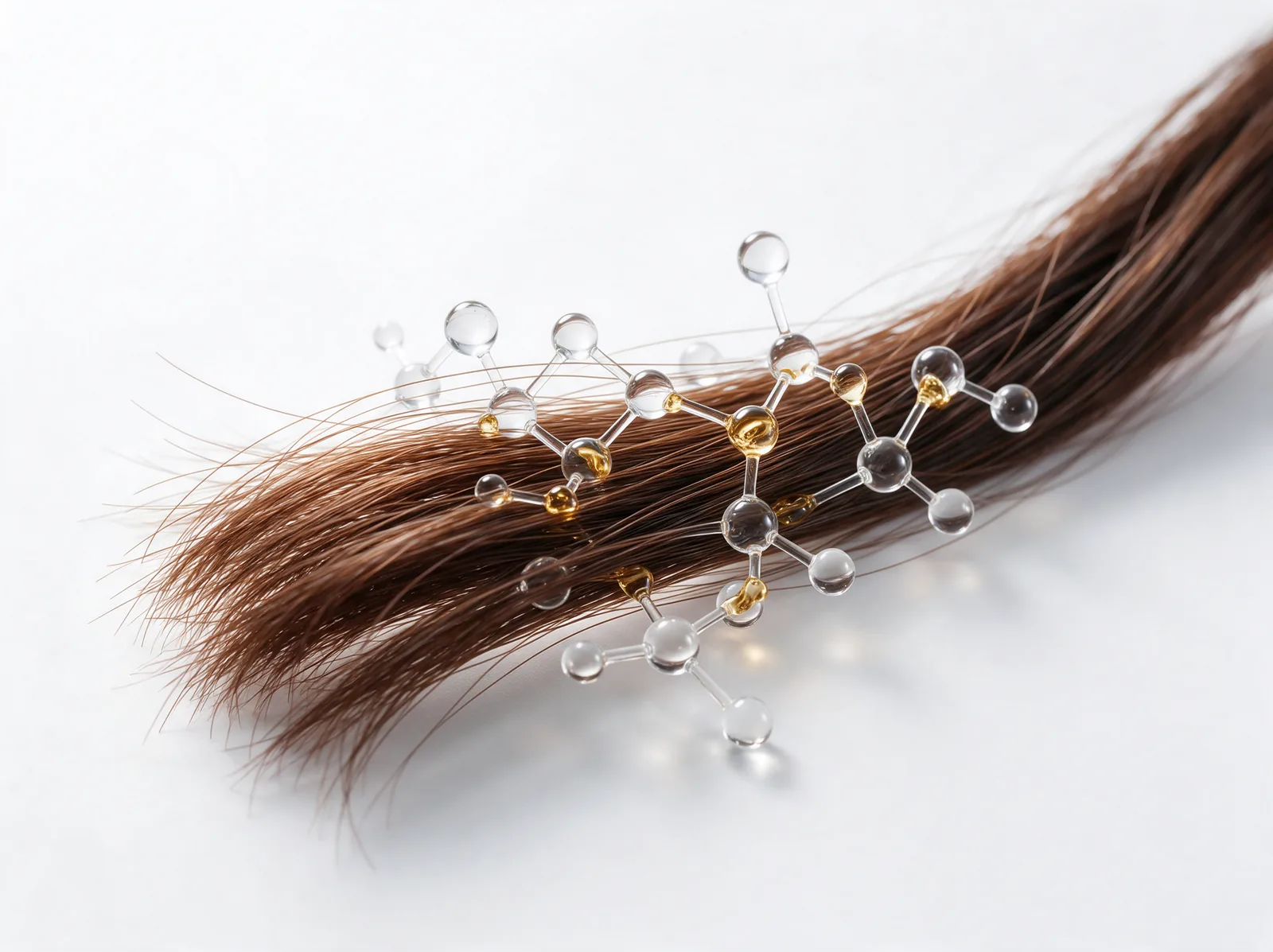
So, what is hair made of? Mostly protein, and the main one is keratin, which Cleveland Clinic calls the primary component of hair. The part you can see is built from keratin-filled cells that are no longer alive (StatPearls), arranged in two or three layers depending on how thick the hair is (StatPearls). Protein makes up roughly 65 to 95% of a hair's weight, according to a 2023 review in Polymers. An adult scalp hair is around 20 to 180 micrometers wide, per a 2014 study in PeerJ. Keratin is strong stuff: diluted acids and alkalis, solvents and water can't dissolve it, Cleveland Clinic notes.
 5 min read
Two Hairs, One Spot: Why Your Hair Grows in Little Bunches?
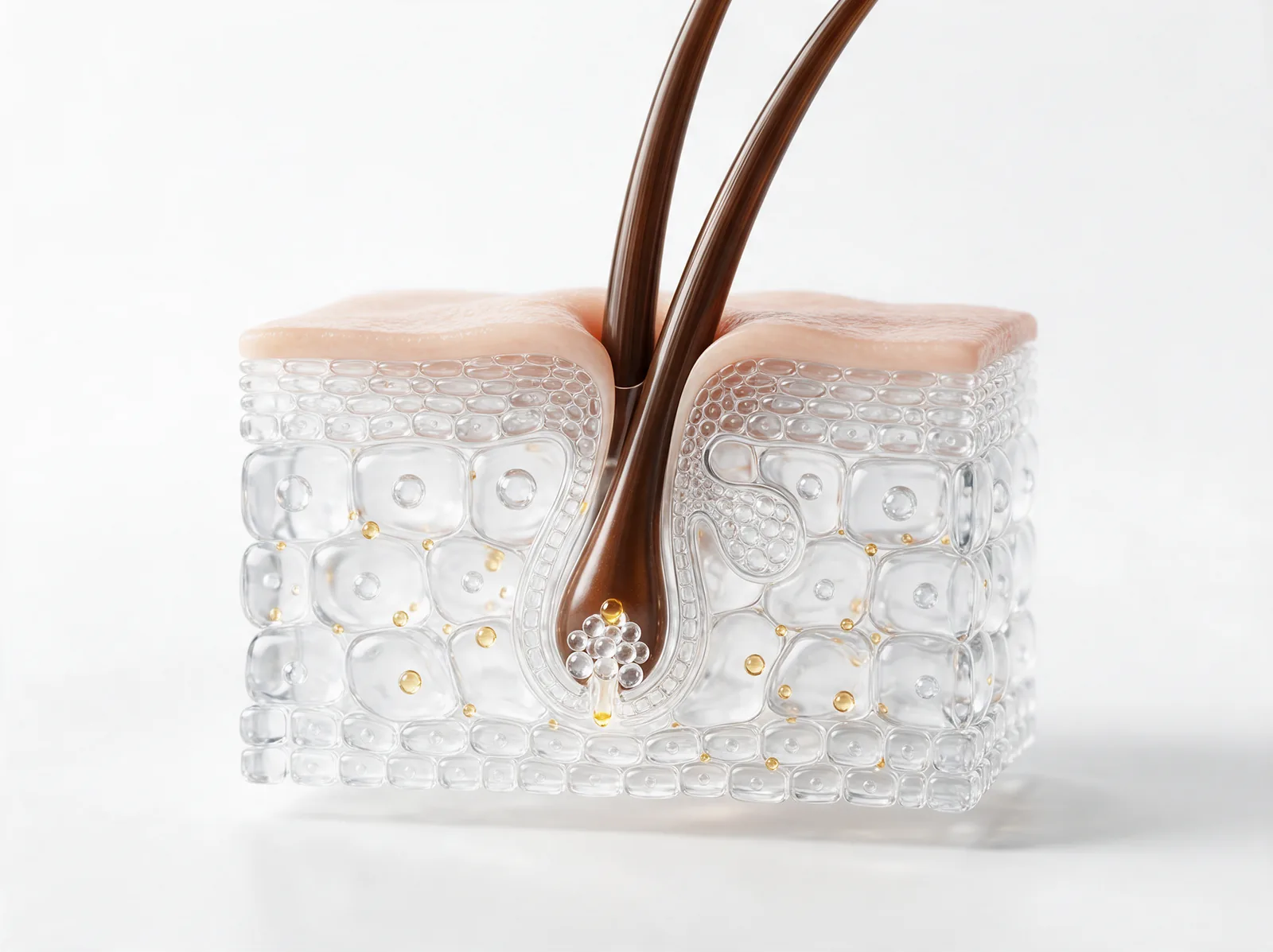
Seeing two or even multiple hairs in one follicle opening usually isn't a glitch. Scalp hair grows in tiny natural bunches called follicular units, and each one holds 1 to 4 terminal (thicker) hairs, according to StatPearls. On a healthy scalp, 2 to 3 hairs typically come out of each unit, a 2011 trichoscopy review reports, so a pair of hairs sharing one spot is simply how a scalp is built. An average scalp has somewhere between 100,000 and 150,000 follicles, according to StatPearls. New hair follicles don't form after birth, StatPearls notes, so the layout you have now was set early.

