
Article · Causes of Hair Loss
How Much Hair Loss Is Normal in a Day?
The short answer
How much hair loss is normal? Ask how much hair you lose in a day, and the American Academy of Dermatology and the NHS both say about 50 to 100 strands is normal, while Cleveland Clinic puts the everyday range as high as 150 and calls shedding a normal part of hair growth. What Cleveland Clinic flags as a possible problem is a sudden, dramatic shift in the amount you're losing. Your scalp holds roughly 100,000 or more follicles, so a day's shedding is a small share of the whole. A single mature follicle goes through 25 to 30 cycles over its lifetime.

Why do you lose hair every day?
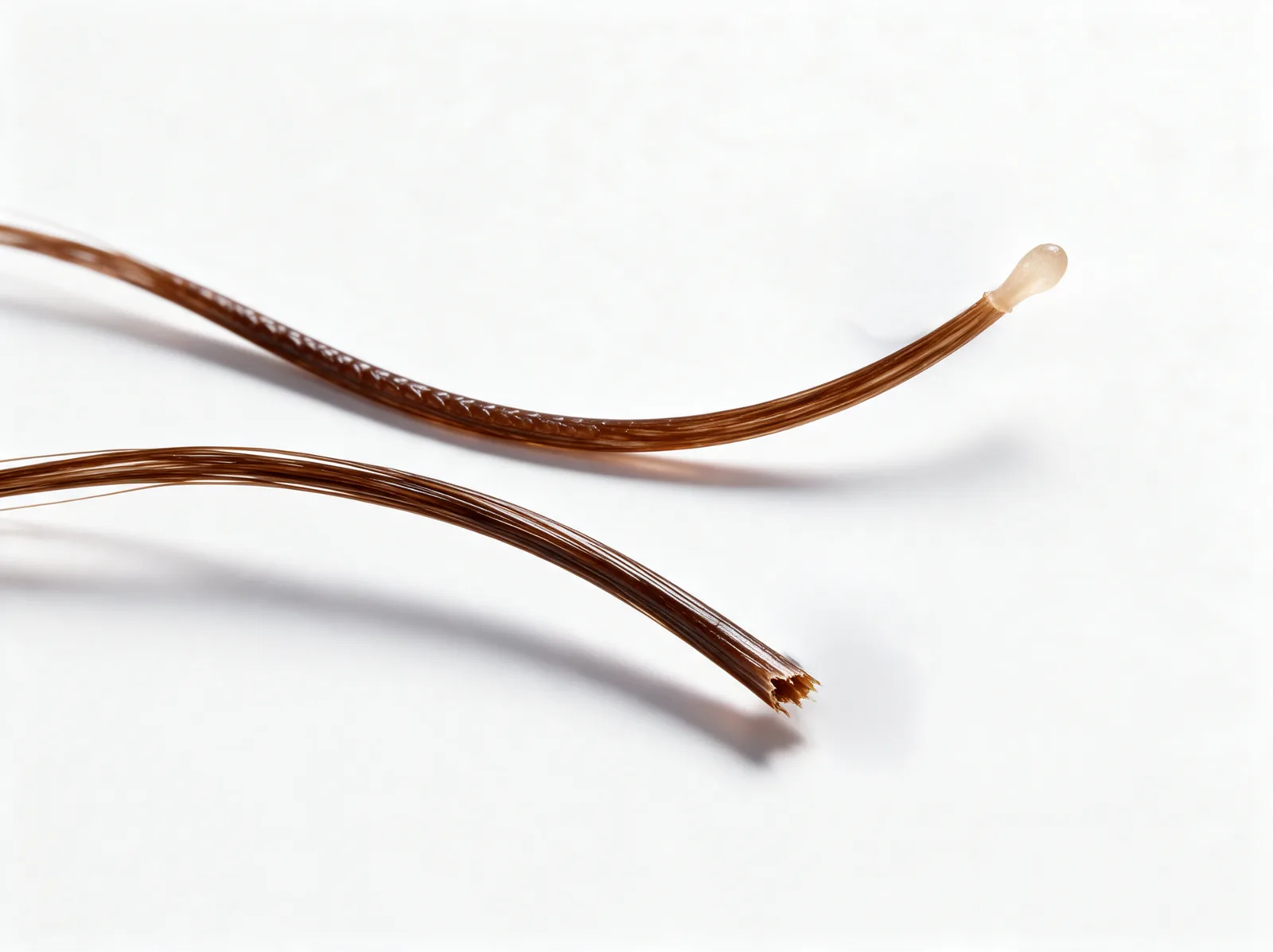
Each follicle repeats a three-part cycle, DermNet explains: it grows a hair (anagen), shifts through a two-to-three-week transition (catagen), then rests (telogen) for about three months. On a healthy scalp, 85% to 90% of follicles are growing at any moment, 1% to 3% are in transition and 5% to 10% are resting. The resting hair, called a club hair, stays anchored until a new hair growing beneath it pushes it out.
Your follicles also don't move through the cycle in sync. They aren't all in the same phase at once, which helps keep the density of your hair steady. DermNet adds that the daily count shifts with your combing and washing habits.
How much shedding in the shower is normal?
Normal hair loss in the shower can feel alarming, but Cleveland Clinic says seeing most of a day's shed hairs land there is fairly common. Shampooing massages the scalp, and all that lathering and rinsing can knock loose hairs that may already be resting or about to shed. You may lose a few more as you comb through afterward.
Hair length and thickness can change the count too. Thick hair may mean shedding nearer 150 to 200 a day, since there's more hair to shed. And if you shampoo once a week or less, wash day may bring a bigger, still normal, round of shedding because of buildup.
How much hair loss is normal, and when is it more?
Shedding well above your usual amount, day after day, is what the AAD calls excessive hair shedding, or telogen effluvium. It's common after giving birth, a high fever, an operation, losing 20 pounds or more, or a lot of stress.
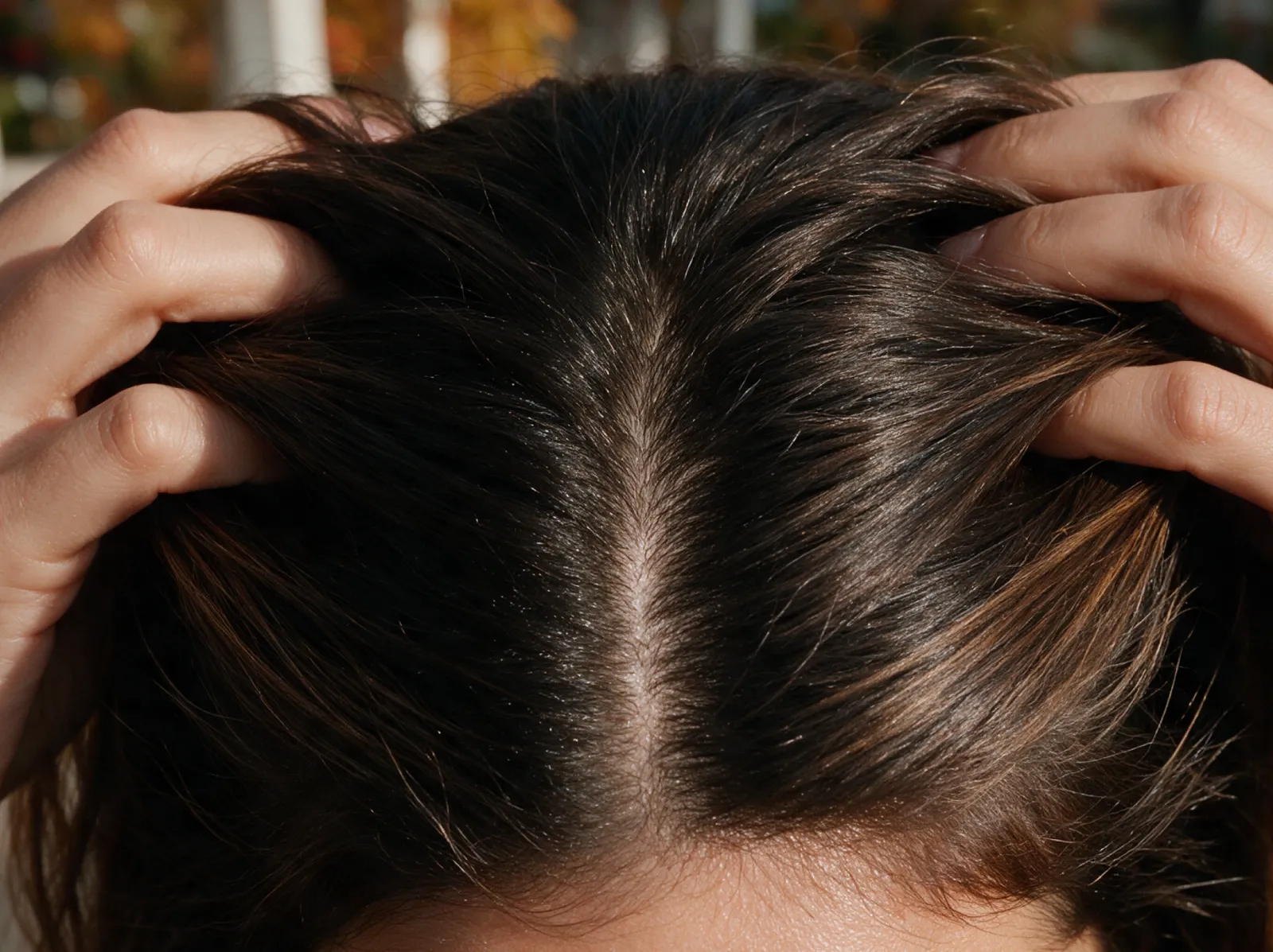
A shock to the system can send up to half of your hair into the resting phase together, according to DermNet, far more than the small resting share on a normal scalp. Because those hairs rest for months before they fall, the extra shedding typically shows up about three months after the trigger. When there's a lot of it, DermNet adds, hair can thin all over the head and the scalp becomes easier to see. And if the stressor sticks around, the AAD notes the shedding can be long-lasting too.
Shedding and hair loss are also different things: the AAD describes hair loss as something stopping hair from growing.
When to talk to a doctor
Talk to a doctor or dermatologist if any of these signs from Cleveland Clinic's shower-shedding guide, its when-to-worry guide or the NHS apply:
you're worried about how much hair you're losing
you find large clumps coming out, or a bald patch shows up within a day or two
you notice thinning, bald spots, a widening part or a change in your hairline
your scalp feels sensitive or irritated
you keep shedding long after you've shampooed, or suddenly find hair all over your clothes
For shedding like this, a doctor typically asks about your health and about events in the months before it started, and examines your scalp, according to StatPearls. A dermatologist can sort out whether it's hair loss, excessive shedding or a mix of both. If you think a medicine is behind your shedding, talk with your doctor before stopping it, because stopping some medicines suddenly can cause serious side effects.
Sources
American Academy of Dermatology. Do you have hair loss or hair shedding?. AAD; No date shown. Accessed October 15, 2026.
NHS. Hair loss. NHS; 2024; page last reviewed January 24, 2024. Accessed October 15, 2026.
Cleveland Clinic (quoting dermatologist Wilma Bergfeld, MD). Here's Why Your Hair Falls Out in the Shower. Cleveland Clinic Health Essentials; 2025 (May 19, 2025). Accessed October 15, 2026.
Cleveland Clinic (quoting dermatologist Wilma Bergfeld, MD). When To Worry About Hair Loss. Cleveland Clinic Health Essentials; 2026 (May 19, 2026). Accessed October 15, 2026.
Fen-Lan Cherry Chang; Amanda Oakley, DermNet Editor in Chief. Hair shedding. DermNet; 2019 (November 2019). Accessed October 15, 2026.
Hughes EC, Syed HA, Saleh D. Telogen Effluvium. StatPearls Publishing (NCBI Bookshelf NBK430848); 2024; updated May 1, 2024. Accessed October 15, 2026. PMID: 28613598.
This article is for education only and is not medical advice. Talk with your healthcare provider about your own hair and scalp health.
Key takeaways
- Each follicle repeats a three-part cycle, DermNet explains: it grows a hair (anagen), shifts through a two-to-three-week transition (catagen), then rests (telogen) for about three months.
- Cleveland Clinic says seeing most of a day's shed hairs land in the shower is fairly common, since lathering and rinsing can knock loose hairs that may already be resting or about to shed.
- Thick hair may mean shedding nearer 150 to 200 a day, since there's more hair to shed, according to Cleveland Clinic.
- Shedding well above your usual amount, day after day, is what the AAD calls excessive hair shedding, or telogen effluvium, and DermNet says it typically shows up about three months after the trigger.
- A dermatologist can sort out whether it's hair loss, excessive shedding or a mix of both, according to the AAD.
Related from the Learning Hub
 0:17
Less Hair in the Towel: An Aesthetician's Husband Tries Xtressé
Kendra Tilleman, an aesthetician and owner of Skinfinity, got her husband to try Xtressé. She says he checks his towel for shed hair after every shower and has been losing less since he started.
 5 min read
Hair Shedding vs. Hair Loss: What's the Difference?
The difference in hair shedding vs. hair loss comes down to one question: is your hair still growing? Shedding is the last step in each hair's growth cycle, and losing 50 to 100 hairs a day is normal, according to the American Academy of Dermatology (AAD). Hair loss is different: something has stopped the hair from growing, and it won't grow until that cause stops. A sudden burst of heavy shedding has a name: telogen effluvium. Some people have both at once.
 4 min read
Why Am I Losing So Much Hair? What a 2008 Review Says About Female Pattern Hair Loss
For many women, slow thinning comes from female pattern hair loss (FPHL), according to a 2008 review by Dr. Matt Leavitt. It tends to come on gradually and often shows first along the center part. The hairline and temples usually stay in place. This review names it as one of three main types of hair loss in women, along with alopecia areata and telogen effluvium, a sudden, heavy shedding. Because these can look alike, the author says the first step is finding out which kind you have.

