What Is DHT and How Does It Affect Hair?
The short answer
DHT (dihydrotestosterone) is a hormone your body makes from testosterone, Cleveland Clinic explains, and MedlinePlus reports that researchers have tied it to pattern hair loss, especially in men. So does DHT cause hair loss? It's part of the cause, says StatPearls. Your genes help determine who ends up with DHT hair loss, Cleveland Clinic notes.
What is DHT?
Cleveland Clinic describes DHT as an androgen, a hormone that shapes the development of male characteristics. The same page notes that an adult converts about 10% of their testosterone into DHT each day, with help from an enzyme called 5-alpha reductase, in places such as the skin, prostate and liver.
StatPearls describes it as the strongest of the androgens and reports that it binds the androgen receptor about twice as strongly as testosterone and lets go about five times more slowly.
How does DHT shrink hair follicles?
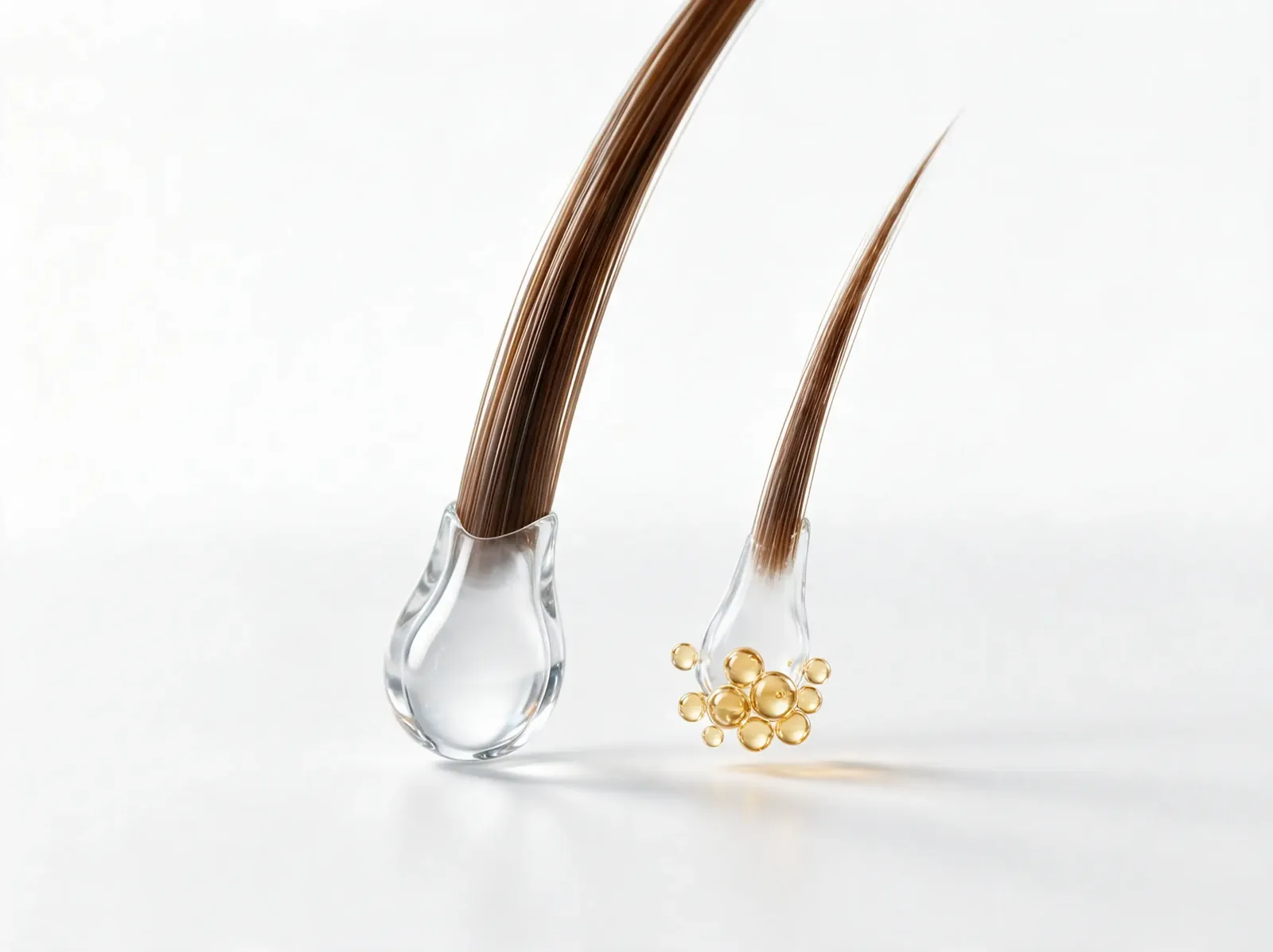
MedlinePlus explains that each hair spends 2 to 6 years growing, rests for several months and then sheds so the follicle can start a new one. Too much androgen stimulation may cut that growing phase short, the same page says, so each new strand comes in shorter and thinner, and replacements are slower to arrive.
Over time, the follicle itself gets thinner and shorter, a process StatPearls calls miniaturization. In balding areas, StatPearlsalso reports higher DHT production, more 5-alpha reductase and more androgen receptors in people with pattern hair loss. DermNet adds that scalp hairs grow in tufts of 3 to 4, and in pattern hair loss those tufts gradually lose hairs until bare scalp shows between them.
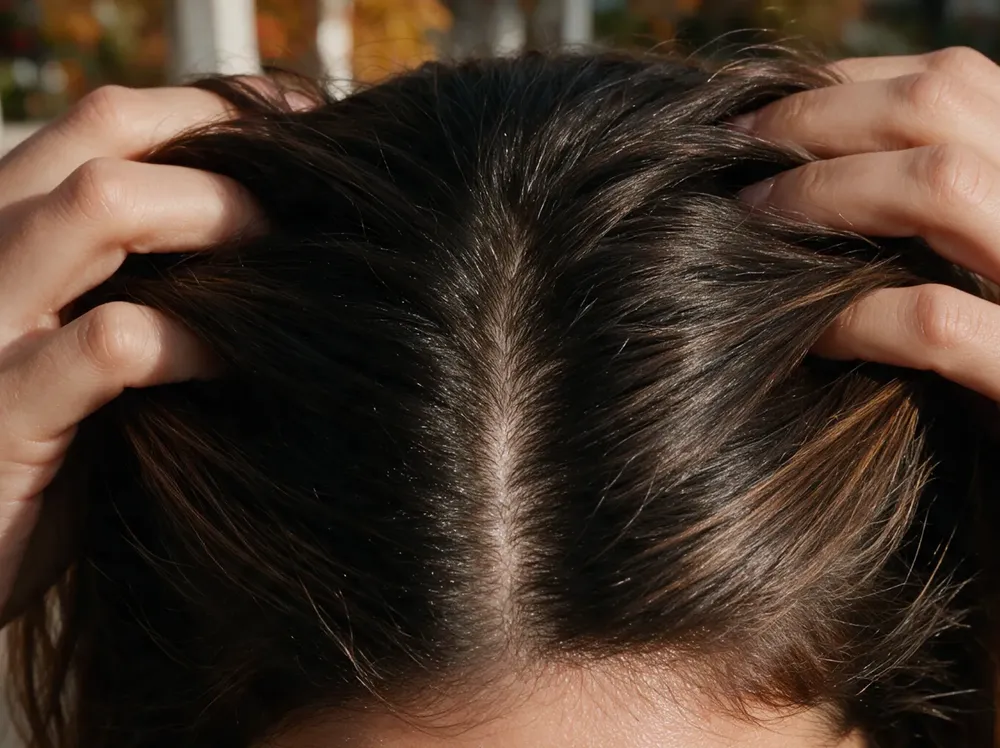
In men, MedlinePlus says, the loss typically starts above both temples and the hairline recedes into an "M" shape. In women, the same page notes, hair thins on top and the part widens, while the hairline typically stays where it is.
Why does DHT thicken beards but thin scalp hair?
Location matters. A 2020 review of hormones and hair explains that androgen receptors sit in the follicle's dermal papilla cells, and that androgens act differently depending on where on the body a follicle grows. On the face, underarms, chest and pubic area, the review says, androgens stimulate growth. On the scalp, they have an inhibiting effect, the review adds, and eyelash follicles aren't under their influence. Many aspects of how androgens act on follicles are still unclear, the authors note.
Hairs at the back of the head are resistant to androgens, and hair transplants rely on this by moving those androgen-resistant follicles, StatPearls explains.
Why does DHT hair loss affect some people and not others?
MedlinePlus says genetic and environmental factors probably both play a part, though most of the risk factors are still unknown. So far, MedlinePlus reports, only one gene has been confirmed. It's AR, which carries the instructions for making the androgen receptor. Studies suggest that variations in AR make those receptors easier to stimulate, the same page adds, though it's still unclear how that makes hair loss more likely. In men, the AR gene sits on the X chromosome, which comes from their mother, Cleveland Clinic notes.
StatPearls calls the use of DHT blood levels to diagnose male pattern hair loss controversial, and those levels haven't been shown to track how baldness progresses.
What is DHT in women?
Men naturally have much higher DHT levels because they make more testosterone, and Cleveland Clinic says scientists aren't sure whether, or how, DHT affects women.
MedlinePlus says androgens are involved in female pattern hair loss, along with other factors not yet known. DermNetsays it isn't clear that they play a role. A few women with female pattern hair loss do have high androgen levels, DermNetnotes, and they tend to have acne, irregular periods and extra facial or body hair, signs typical of polycystic ovary syndrome (PCOS).
When to talk to a doctor
If your hair is thinning, your doctor can do a workup to rule out other causes, DermNet explains, which for women may include sex hormone blood tests. Per StatPearls, pattern hair loss is usually diagnosed from your history and an exam, and a biopsy usually isn't needed. And if you think you have a condition tied to high or low DHT, Cleveland Clinic suggests talking with your provider, who can order tests or send you to an endocrinologist.
Sources
Cleveland Clinic. DHT (Dihydrotestosterone). Cleveland Clinic Health Library; 2022; updated December 20, 2022. Accessed October 15, 2026.
Cleveland Clinic. Male Pattern Baldness (Androgenic Alopecia). Cleveland Clinic Health Library; 2022; updated December 9, 2022. Accessed October 15, 2026.
MedlinePlus Genetics. Androgenetic alopecia. U.S. National Library of Medicine; updated July 27, 2023. Accessed October 15, 2026.
Grymowicz M, Rudnicka E, Podfigurna A, Napierala P, Smolarczyk R, Smolarczyk K, Meczekalski B. Hormonal Effects on Hair Follicles. International Journal of Molecular Sciences; 2020;21(15):5342. Accessed October 15, 2026. DOI: 10.3390/ijms21155342. PMID: 32731328.
Ho CH, Sood T, Zito PM. Androgenetic Alopecia. StatPearls Publishing; updated January 7, 2024. Accessed October 15, 2026. PMID: 28613674.
Kinter KJ, Amraei R, Anekar AA. Biochemistry, Dihydrotestosterone. StatPearls Publishing; updated July 30, 2023. Accessed October 15, 2026. PMID: 32491566.
Goldin J, Zito PM, Raggio BS. Hair Transplantation. StatPearls Publishing; updated August 2, 2025. Accessed October 15, 2026. PMID: 31613520.
Yip L; updated by Sinclair R. Female pattern hair loss. DermNet; 2007; updated July 2015. Accessed October 15, 2026.
This article is for education only and is not medical advice. Talk with your healthcare provider about your own hair and scalp health.
Key takeaways
- The same hormone that helps grow a beard can thin the hair on top of your head.
- An adult converts about 10% of their testosterone into DHT each day, with help from an enzyme called 5-alpha reductase.
- Hairs at the back of the head are resistant to androgens.
- So far, only one gene has been confirmed, AR, which carries the instructions for making the androgen receptor.
- Pattern hair loss is usually diagnosed from your history and an exam, and a biopsy usually isn't needed.