Does Accutane Cause Hair Loss?
The short answer
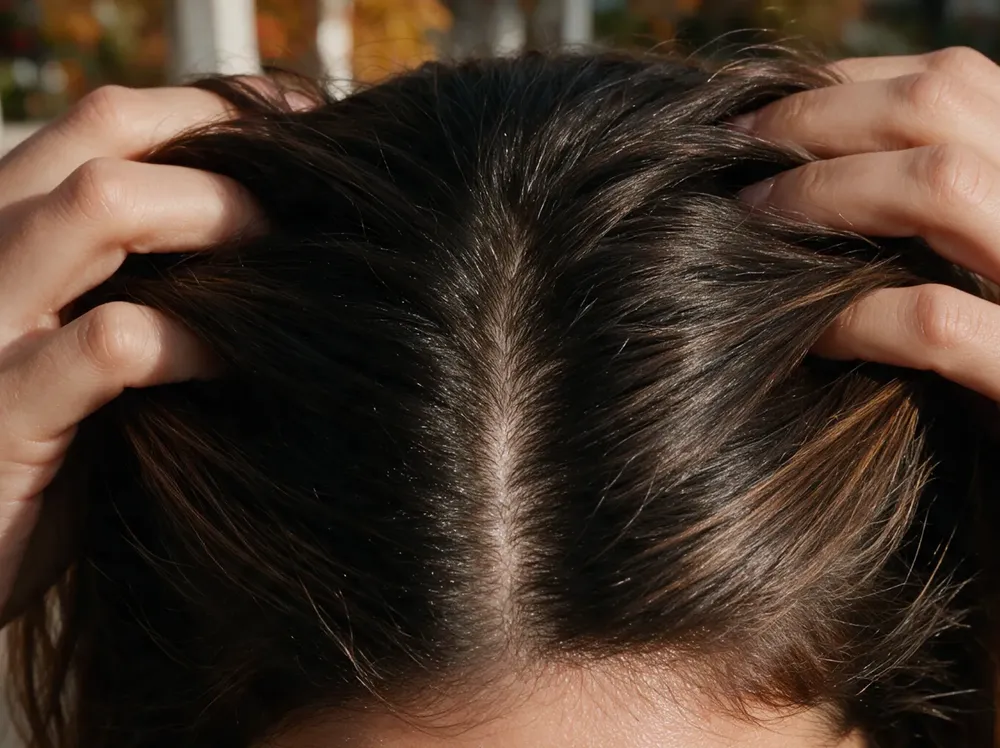
Does Accutane cause hair loss? It can. MedlinePlus lists hair loss among the possible side effects of isotretinoin, the severe-acne medicine known by the brand name Accutane. A 2022 review of studies found hair loss reported by 3.2% of people on lower daily doses and 5.7% of those on higher ones. The British Association of Dermatologists describes Accutane hair loss as usually mild and temporary.
How often does Accutane cause hair loss?
The 2022 review pooled 17 studies of people taking isotretinoin for acne that broke out hair loss by dose. Its authors saw a possible trend toward more hair loss at higher daily doses, but the studies were too varied to test whether the gap was real. Most also relied on people reporting hair loss themselves, which the authors note is open to subjectivity.
Product information for isotretinoin in North America has called hair loss a rare side effect, the 2022 review notes. Yet the review's figures weren't far from those for dry eyes, a side effect doctors already talk through with patients. So the authors suggested bringing up hair loss before someone starts the medicine.
Why can Accutane cause hair loss?
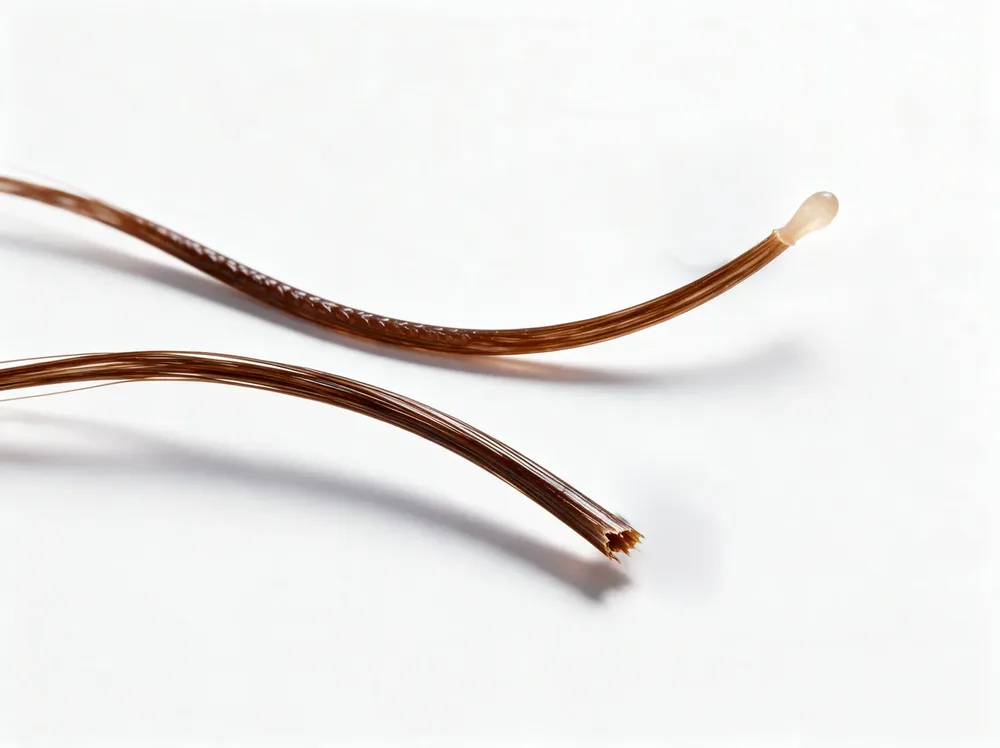
Each hair follicle cycles between growing and resting. On a healthy scalp, about 85% of hairs are in the growing phase (anagen) and 15% are resting (telogen), according to StatPearls. A follicle typically grows one hair for nearly 4 years, rests for about 4 months, then a new hair pushes the old one out, StatPearls adds.
Telogen effluvium begins when something pushes many growing hairs into the resting phase at once, StatPearls explains. Once those follicles start a new hair, the resting ones are pushed out together. That's when the shedding becomes noticeable.
How isotretinoin sets this off isn't clear. Retinoids are thought to delay the growth phase and loosen resting hairs' grip on the follicle, the review explains, so more of them shed.
Telogen effluvium generally shows up around 3 months after whatever triggered it, StatPearls notes, though it can take anywhere from 1 to 6 months. With isotretinoin, only one study had tracked the timing when the review was done. For those who lost hair, the median start was 4 weeks in, ranging from week 1 to week 24.
Dose and time on the medicine may matter too. In two small studies in the review that used a magnifying scalp camera, 30 people on a lower dose for 3 months showed no significant change, while 30 on higher doses for 4 to 7 months had lower hair counts and density. It's unclear whether the higher dose or the longer course made the difference.
Does Accutane hair loss last?
There's not much research on this. Only 2 of the 22 studies in the review looked at whether hair loss reversed, and they disagreed. One reported that it was temporary. The other said it continued after stopping but gave no data to back that up.
A current US prescribing label for isotretinoin lists alopecia, the medical term for hair loss, that "in some cases persisted." The label also notes that with voluntary reports, it isn't always possible to confirm the drug was the cause. Still, the review's authors concluded there is no definitive evidence that hair loss continues once a course is finished.
When to talk to a doctor
If you're shedding more than usual, tell the doctor who prescribed isotretinoin. The same goes for any side effect that's severe or won't go away, MedlinePlus says. Don't stop the medicine on your own; the NHS advises continuing it unless you're told otherwise. In the US, people on isotretinoin see their doctor monthly to talk through side effects, an easy time to mention it.
If your shedding started before your course or carries on well after it, ask a dermatologist to look at other possible causes.
Ask your doctor before taking any vitamins or supplements.
Sources
MedlinePlus, US National Library of Medicine. Isotretinoin. MedlinePlus Drug Information; 2018 (last revised August 15, 2018). Accessed October 15, 2026.
Lytvyn Y, McDonald K, Mufti A, Beecker J. Comparing the frequency of isotretinoin-induced hair loss at <0.5-mg/kg/d versus ≥0.5-mg/kg/d dosing in acne patients: A systematic review. JAAD International; 2022;6:125–142. doi:10.1016/j.jdin.2022.01.002. PMID: 35199047. Accessed October 15, 2026.
British Association of Dermatologists. Isotretinoin. BAD Patient Hub; 2023 (produced October 2023; next review October 2026). Accessed October 15, 2026.
Hughes EC, Syed HA, Saleh D. Telogen Effluvium. StatPearls Publishing; 2024 (last update May 1, 2024). Bookshelf ID: NBK430848. PMID: 28613598. Accessed October 15, 2026.
Sun Pharmaceutical Industries, Inc. Absorica / Absorica LD (isotretinoin) capsule: prescribing information. DailyMed, US National Library of Medicine; 2026; updated August 19, 2026. Accessed October 15, 2026.
NHS. Isotretinoin: a medicine for severe acne. NHS; 2026; page last reviewed June 26, 2026. Accessed October 15, 2026.
This article is for education only and is not medical advice. Talk with your healthcare provider about your own hair and scalp health.
Key takeaways
- The Accutane brand is off the US market now, though MedlinePlus notes that generic versions may be available.
- Isotretinoin is a retinoid, part of the vitamin A family, and StatPearls names retinoids among the medicines most often linked to telogen effluvium, a type of shedding.
- Telogen effluvium generally shows up around 3 months after whatever triggered it, StatPearls notes, though it can take anywhere from 1 to 6 months.
- Only 2 of the 22 studies in the 2022 review looked at whether hair loss reversed, and they disagreed.
- If you're shedding more than usual, tell the doctor who prescribed isotretinoin.